
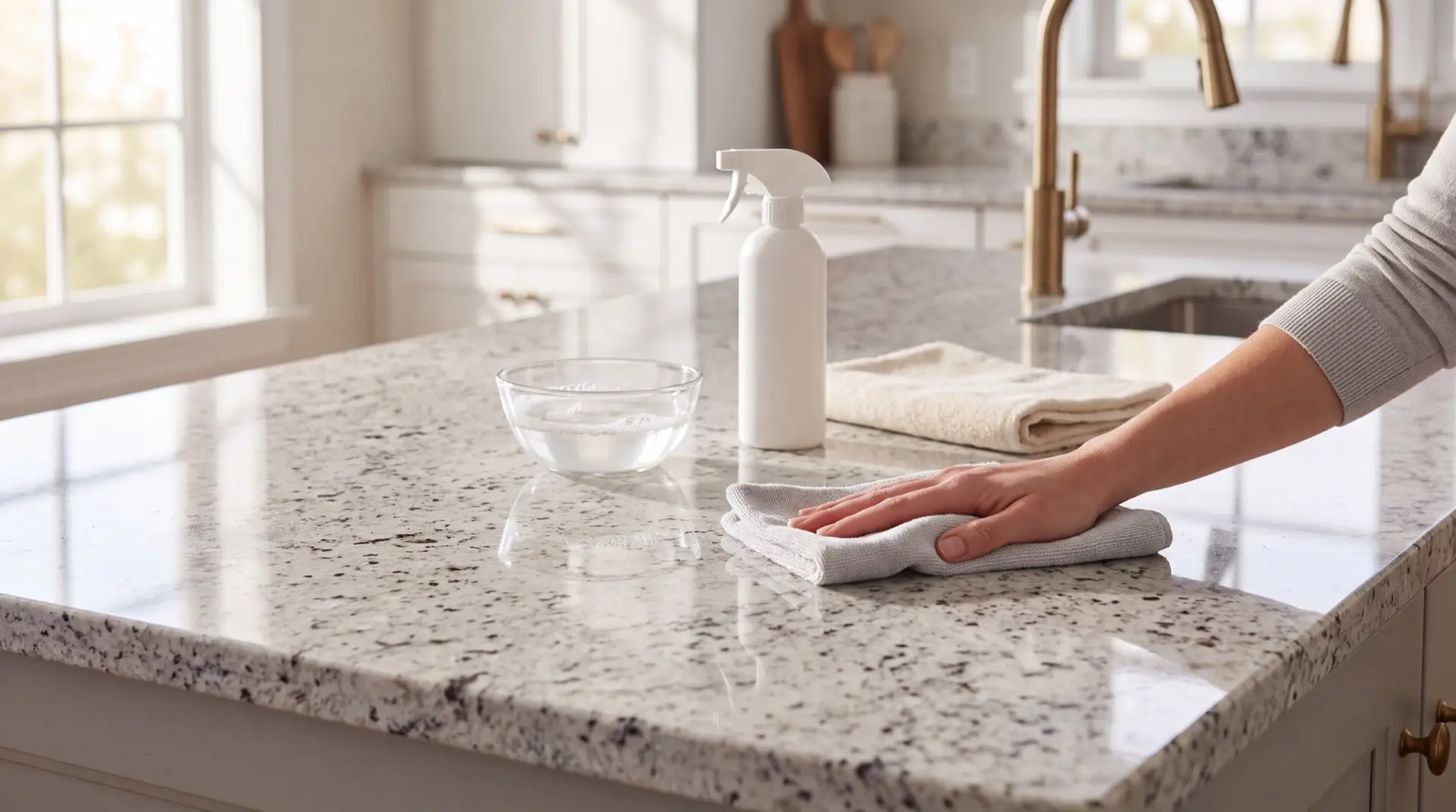
Knowing how to clean granite countertops comes down to one routine. Wipe with warm water, a few drops of mild dish soap and a soft microfiber cloth, then rinse and dry with a clean towel.
That is the routine in the Pacific Shore Stones Granite Care Guide, and it matches the Natural Stone Institute’s care recommendations. For deeper cleaning, use a pH-neutral stone cleaner. Anything stronger wears down the sealer and dulls the finish.
How to Clean Granite Countertops Daily
You need two microfiber cloths, warm water and a mild dish soap.
- Clear the counter. Sweep crumbs away so grit does not scratch the polish.
- Mix a light solution. A few drops of soap in warm water is enough.
- Wipe with a damp, not dripping, cloth. Work in small circles. Hold the cloth on dried food to soften it instead of scrubbing.
- Rinse. Wipe again with a second cloth dampened in clean water to lift soap residue.
- Dry right away. Buff with a dry microfiber cloth or towel. Standing water leaves spots and cloudy residue.
Before you try a new product, confirm it is safe for natural stone. The care guide warns that the wrong product can weaken the sealer, dull the finish or leave residue. Test it in a hidden spot first.
If you are not sure the counter is granite (some engineered surfaces look similar), ask your fabricator or a Pacific Shore Stones specialist.
Polished, Honed and Leathered Granite
Each finish behaves differently:
- Polished granite shows fingerprints and water spots, especially dark stones like Absolute Black. Drying matters more than the cleaner.
- Honed granite hides marks but needs resealing more often than polished stone, so watch the water test.
- Leathered granite has dips that trap crumbs and liquids. Use a soft nylon brush with the soapy water, then rinse and dry.
A Granite Cleaning Schedule
| When | What to do |
|---|---|
| After each use | Wipe with soapy water, rinse, dry |
| After raw meat or eggs | Clean with soapy water; if you disinfect, use a stone-safe product and rinse |
| Weekly | Clean behind the faucet, around the cooktop and under small appliances, where grease builds up |
| When spills start to darken the stone | Run the water test near the sink and cooktop |
How to Disinfect Granite
Disinfecting is not part of the care guide’s routine. Warm water and mild dish soap handle daily cleaning.
If you need to disinfect, choose a product labeled safe for natural stone. Test it on a hidden spot, then rinse with clean water and dry.
Do not use bleach or ammonia, and never mix them: the Natural Stone Institute warns the combination creates a toxic gas.
What Not to Use on Granite
The Granite Care Guide’s avoid list: vinegar, lemon juice, bleach, ammonia, glass cleaners, bathroom cleaners, oven cleaners, strong degreasers, abrasive powders, steel wool, rough sponges and other acidic products. It also says not to cut directly on the stone or set hot items on it.
| Product | Safe on granite? |
|---|---|
| Mild dish soap, a few drops in warm water | Yes, daily |
| pH-neutral stone cleaner | Yes, for deeper cleaning |
| Disinfectant labeled safe for natural stone | When needed, then rinse |
| Vinegar, lemon juice and other acids | No |
| Glass cleaners and ammonia | No |
| Bleach | No |
| Abrasive powders, steel wool, rough sponges | No |
| Rust removers and toilet bowl cleaners | Never |
The last row is a hard stop. The Natural Stone Institute warns that many rust removers and toilet bowl cleaners contain trace levels of hydrofluoric acid, which attacks granite.
Can You Use Clorox Wipes on Granite?
Disinfecting wipes are not part of routine granite care. The Pacific Shore Stones guide keeps daily care to warm water and mild dish soap, with a pH-neutral stone cleaner for deeper cleaning.
If you need to disinfect, choose a product labeled safe for natural stone, test a hidden spot and rinse with clean water.
Can You Use Vinegar on Granite?
No. The Natural Stone Institute calls granite resistant to most kitchen acids but still advises against acidic cleaners, because some granites contain acid-sensitive minerals. Acids also weaken the sealer, which is why the care guide puts vinegar and lemon juice at the top of its avoid list.
Can You Use Windex on Granite?
No. Glass cleaners and ammonia are both on the care guide’s avoid list. The Natural Stone Institute also notes that frequent use of ammonia may dull some stones over time.
What to Do About Granite Stains
A stain is absorbed into the stone and looks darker. An etch or worn spot looks lighter or dull and needs professional repolishing, not cleaning.
| Stain | Looks like | Safe first step |
|---|---|---|
| Oil (cooking oil, grease, milk, cosmetics) | Darker patch | Blot, wash with mild dish soap and water, dry |
| Organic (coffee, tea, wine, fruit) | Pinkish-brown | Blot, wash with mild dish soap and water, dry |
| Water near the sink | Dark patch that fades as it dries | Keep the area dry and wait |
| Hard water | White, chalky film | pH-neutral stone cleaner and a soft cloth |
| Rust | Orange-brown, shaped like the object | Move the object and call a pro |
| Ink | Lines or dots | Blot, wash with mild dish soap and water, dry |
The Granite Care Guide’s rule for spills is to blot right away instead of wiping, which spreads them. Then wash with warm water and a few drops of mild dish soap, rinse and dry with a clean towel.
A dark ring around the faucet is usually absorbed water, not a stain. It fades as the area dries. If it keeps coming back, the sealer near the sink may be worn.
Do not try home chemical treatments: they can lighten, etch or spread the stain. A mark that stays after washing and drying is a job for a professional.
Oil Stains on Granite
Oil soaks in fast and darkens the stone. Blot it right away, wash the area with warm water and a few drops of mild dish soap, then rinse and dry.
If the dark patch is still there once the stone is fully dry, call a stone restoration professional rather than trying pastes or solvents at home.
When to Call a Pro
Stains that stay after washing, rust, chips, cracks and dull patches that cleaning will not touch are restoration work. A professional assesses the stain, uses specialized treatments and reseals the area afterward.
Pacific Shore Stones distributes stone and does not do restoration, so look for a local stone restoration specialist.
Streaks After Cleaning Granite Countertops
If you know how to clean granite countertops and they still look streaky, one of four causes is usually to blame:
- Soap film. Too much soap leaves a film, the Natural Stone Institute notes. Use less, rinse with clean water and change the rinse water often.
- Air-drying. Standing water leaves spots and cloudy residue. Dry every time.
- Sealer residue. Excess sealer left to dry on dense granite leaves a white haze. Daily cleaning will not lift it; ask whoever sealed the counter about stripping and resealing.
- Worn finish. A spot that stays dull when dry may be etched or worn and needs professional repolishing.
To bring back the shine, remove whatever sits on top (soap, minerals, residue), then dry and buff with a clean microfiber cloth. Polished granite gets its shine from the finish cut into the stone, so it needs no extra polish.
How to Prevent Stains
Blot spills quickly with a clean cloth instead of spreading them. The care guide names oil, wine, coffee, tomato sauce, citrus juice, vinegar, alcohol and colored liquids. Use coasters, cutting boards and trivets, and protect edges, seams and sink cutouts from impact.
Sealing does the rest. Leave water on the surface for about 15 minutes; if the stone darkens, it may be time to reseal. Sealing reduces absorption but does not make granite stain-proof. Our guide on how to seal granite countertops covers the process.
That is how to clean granite countertops and keep them looking new. Download the Granite, Marble and Quartzite guides from the Pacific Shore Stones stone care guides page. Read Granite 101 to see how the stone forms.
To compare polished, honed and leathered slabs, browse the granite collection or visit one of the 16 Pacific Shore Stones showrooms.