
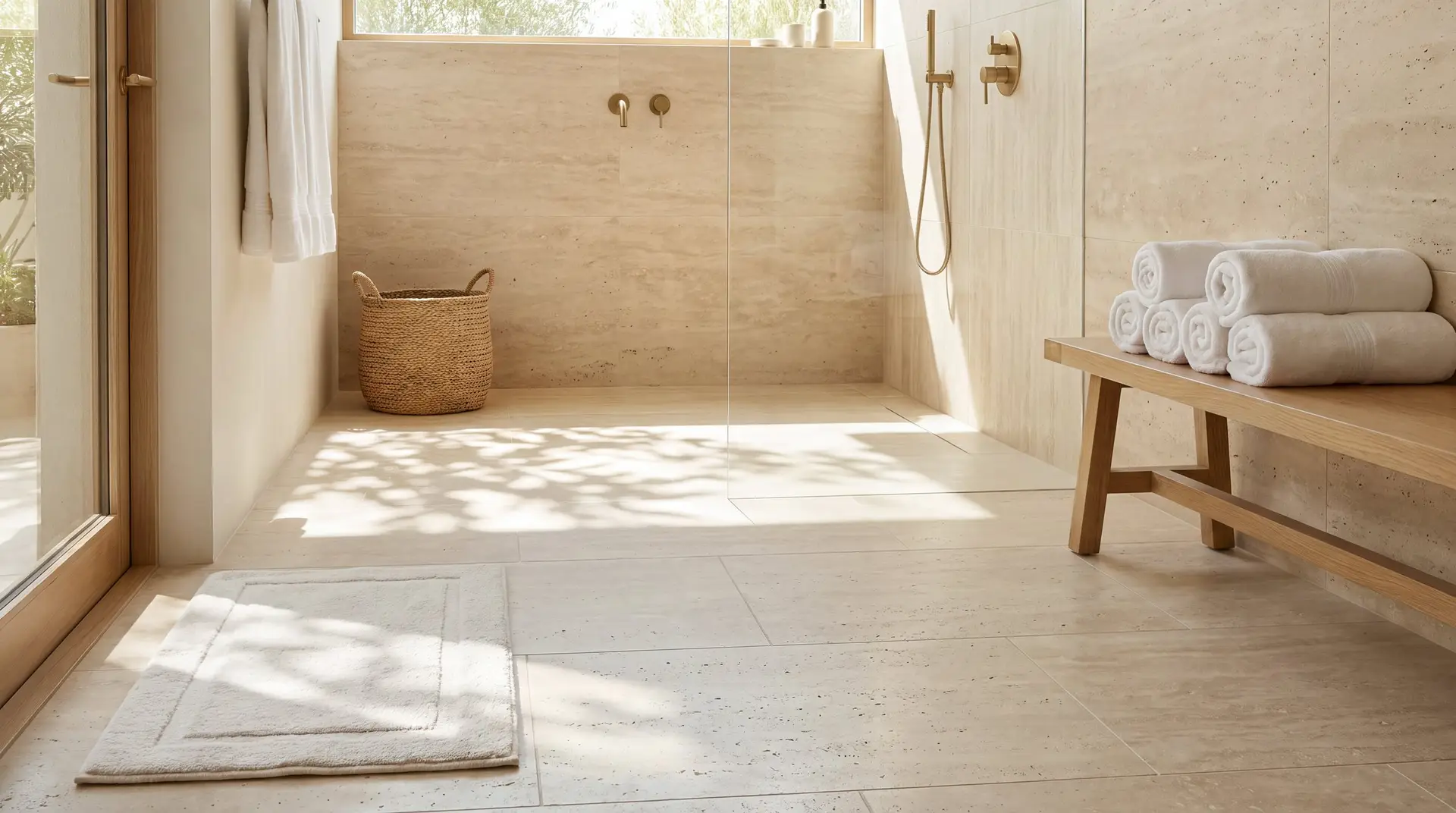
How to clean travertine: wash it with warm water and a pH-neutral stone cleaner or a few drops of mild dish soap. Use a soft microfiber cloth, mop or nylon brush, then rinse and dry. Keep vinegar, lemon, bleach, ammonia and bathroom sprays off the stone, and skip the steam mop and the pressure washer.
That routine comes from the Pacific Shore Stones Travertine Care Guide. Pacific Shore Stones has distributed natural stone, travertine included, since 2004. What changes from room to room is the problem: grit in a floor’s holes, soap scum in a shower, algae on a pool deck.
Know Your Travertine First
Travertine is a form of limestone. Like marble, it is built on calcium carbonate.
The Natural Stone Institute describes the group as vulnerable to alteration by mild acids. Absorption ranges from under 1% to more than 10%, depending on the variety.
Filled or unfilled holes
Gas escaping as travertine forms in mineral springs leaves the stone’s signature voids. Filling them with grout gives a smoother, more durable surface, and many tiles leave the factory already filled.
Unfilled travertine keeps its open pits, and those pits collect dust, soap and sand. Fill can shrink or come loose over time; refilling with color-matched grout or epoxy is a job for a professional.
Honed, tumbled or polished
| Finish | What it looks like | What it means for cleaning |
|---|---|---|
| Honed | Smooth and matte | Hides light etching and minor scratches better than polish, but it is the more porous surface |
| Tumbled or brushed | Textured, softened edges | Dirt settles into the texture, so a soft brush works better than a mop |
| Polished | Glossy and reflective | Shows etch marks and scratches first; grit dulls traffic lanes |
Is it sealed?
The Travertine Care Guide’s water test: place water on the surface for 5 minutes. If the stone darkens, it may be time to reseal. Travertine is sealed after installation and resealed as needed, but sealing does not make it stain-proof, heat-proof, scratch-proof or acid-proof.
How to Clean Travertine Floors
- Remove grit first. Dust mop, or vacuum with a soft brush attachment and no beater bar. Sand underfoot acts like sandpaper, which is why the Natural Stone Institute recommends frequent dust mopping and mats at entrances.
- Mix a mild solution. Warm water with a pH-neutral stone cleaner at the label’s dilution, or a few drops of mild dish soap. Too much cleaner or soap leaves a film and streaks, the NSI warns.
- Damp mop, never flood. Wring the mop well, and rinse it in a second bucket of clean water so you do not spread dirt.
- Rinse. Go over the floor once with clean water to lift any residue.
- Dry. Buff with a microfiber towel or dry mop to prevent water spots.
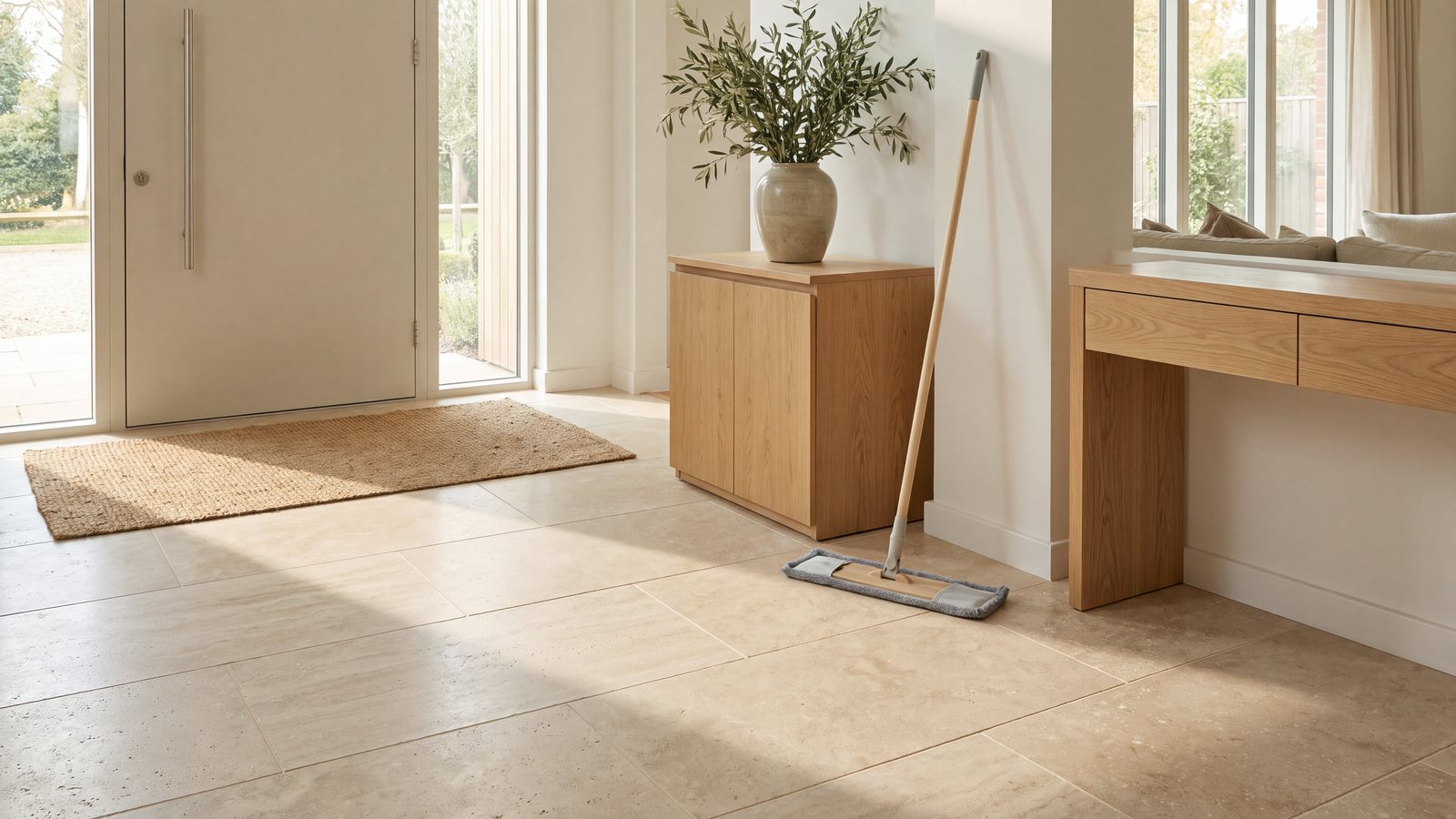
Holes and grout lines
On unfilled or tumbled travertine, a vacuum does more than a mop: it pulls debris out of the stone’s holes and the grout lines. For what stays behind, work the pH-neutral solution in with a soft nylon brush, then rinse and dry.
Many hardware store grout cleaners contain acids that damage the stone next to the joint, so keep them off travertine.
A grimy or neglected floor
Give it two or three rounds of the routine above with a soft brush. If it still looks dull or blotchy, it is probably etched or worn, not dirty. That takes a restoration pro who can deep clean, hone and reseal.
Can you steam clean travertine floors?
Not as a routine. Steam can strip sealer, open existing cracks and loosen the fill in travertine holes. Use a damp microfiber mop instead.
How to Clean Travertine Tile and Showers
On walls and backsplashes, use the same solution with a soft cloth, wiping from the top down, then rinse with a damp cloth and dry. Showers need more habit than effort.
After every shower
The NSI notes that a squeegee after each use minimizes soap scum. Keep bottles in a caddy off the floor, and ventilate to keep mildew down.
Weekly cleaning
Spray a pH-neutral stone cleaner, or warm water with a few drops of mild dish soap. Let it loosen residue for a few minutes.
Scrub with a soft nylon brush or microfiber cloth, then rinse and dry.
Soap scum and hard water
Acid dissolves mineral scale, and it dissolves travertine too, so lime, calcium and scale removers are off the table. They leave a dull etched film that cleaning cannot remove.
For soap scum, repeat the weekly pH-neutral wash with a soft brush, and squeegee after every shower. Skip bathroom cleaners, daily shower sprays and disinfectant sprays. Scum or scale that stays is a job for a stone care professional.
Mold and mildew in the grout
Mildew mostly grows in grout and caulk rather than in the stone. Scrub the grout weekly with a soft brush and a pH-neutral stone cleaner, then rinse, dry and ventilate.
If mildew stays or keeps returning, call a stone care professional. Grout that stays dark after cleaning may need regrouting.
Sealing the shower
Use the 5-minute water test on walls and floor to decide when to reseal. Ask your installer which sealer was used before adding anything new.
How to Clean Travertine Pavers and Pool Decks
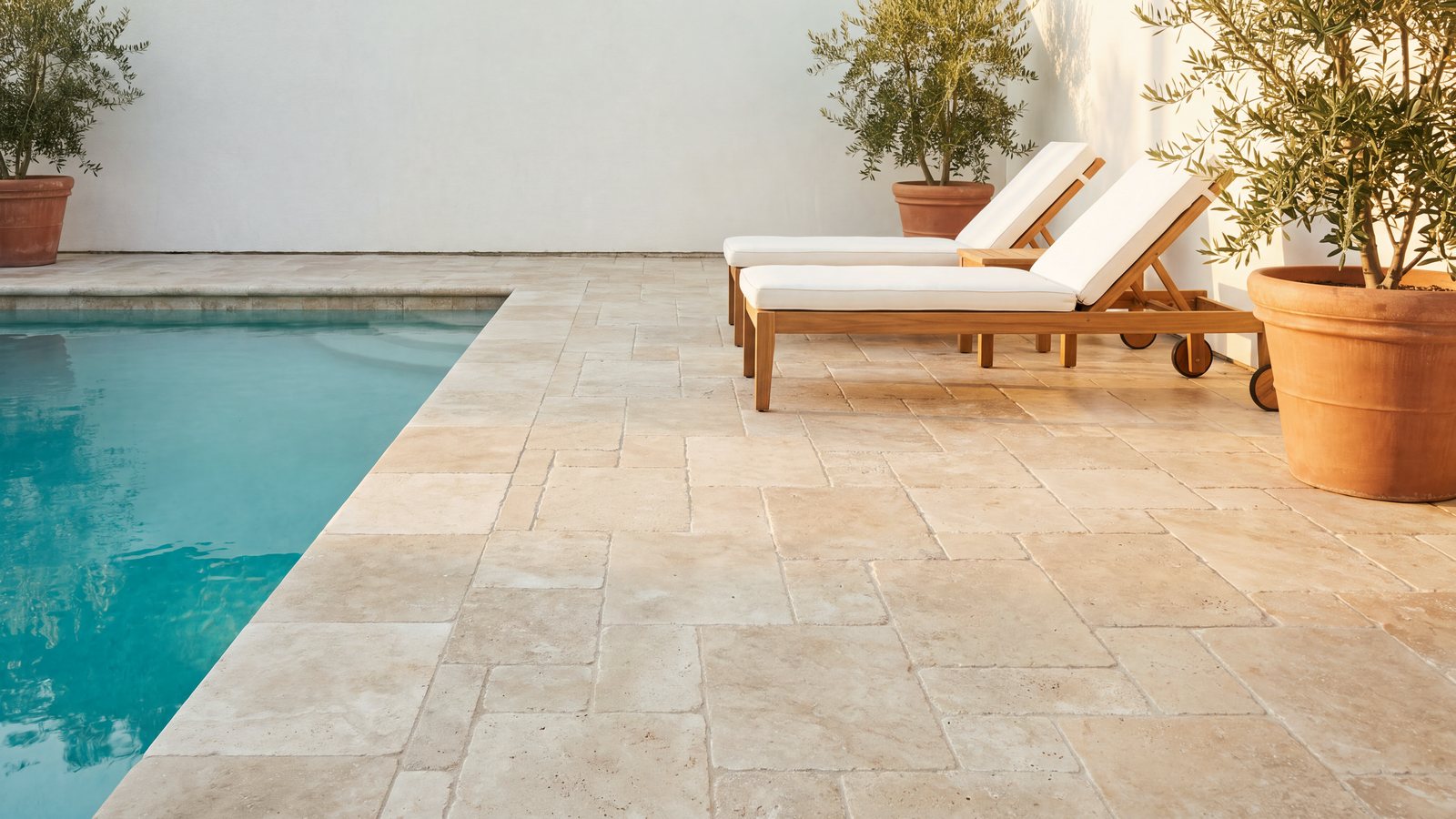
Travertine is a favorite for patios and pool surrounds, as our travertine trends article explains. Outdoors, the enemies are leaves, algae, sunscreen and pool water.
- Sweep leaves and debris with a soft-bristle broom before they stain.
- Flush the surface with clear water from a garden hose, as the NSI recommends for pool, patio and hot tub areas.
- For grime, scrub with a pH-neutral stone cleaner and a soft brush, then rinse thoroughly.
- Rinse the coping and splash zone after pool use, and keep pool chemicals and sunscreen sprays off the stone.
Algae and moss
Scrub algae or moss with a pH-neutral stone cleaner and a soft brush, then rinse thoroughly. Keep bleach off the stone: the Pacific Shore Stones guides list it among the products to avoid.
For growth that keeps coming back, call a stone care professional.
Should you pressure wash travertine?
Not without consulting a stone professional. High pressure can pit the surface, blow out void fill and force water deep into the stone. A hose and a soft brush is the homeowner method; heavy buildup is a job for a hardscape pro.
Travertine Countertops and Vanities
The NSI notes that acid sensitivity combined with absorption limits which travertine varieties suit countertops. A travertine vanity or kitchen top needs marble-level care. The Travertine Care Guide adds the rules for work surfaces:
- Do not cut directly on the stone or place hot items on it; use cutting boards, trivets, coasters and trays.
- Clean spills immediately by blotting, not wiping.
- Lift items instead of dragging them, and protect edges, corners, seams and sink cutouts from impact.
Our guide to caring for marble countertops applies too, since the two stones share the same chemistry.
What to Do About Travertine Stains
Check the color first. A stain is darker than the stone; a pale, dull mark is an etch, which no cleaner will lift. Our guide to marble etching explains the repair, and travertine responds the same way.
| Mark | What it looks like | Common sources |
|---|---|---|
| Oil-based stain | Darker spot, often with a soft edge | Cooking oil, cosmetics, sunscreen |
| Organic stain | Brown or pinkish spot | Coffee, tea, wine, food, leaves |
| Rust | Orange or brown spot | Metal cans, furniture feet, planters |
| Water ring | Darker ring or patch | Standing water, glasses, plant pots |
| Etch | Lighter, dull spot | Citrus, vinegar, wine, acidic cleaners |
For any fresh spill, follow the Travertine Care Guide:
- Blot it right away with a clean cloth. Do not wipe, which spreads it.
- Wash the spot with warm water and a few drops of mild dish soap, or a pH-neutral stone cleaner.
- Rinse and dry with a clean towel.
A dark water ring usually fades as the stone dries, so give it time. Do not try home chemical treatments: they can lighten, etch or spread the stain.
If a mark stays after washing, call a stone restoration professional. They can assess the stain and use specialized treatments, then reseal the area.
What Not to Use
The Travertine Care Guide’s rule for anything new: test it on a tiny, hidden area first.
| Product | Why it is a problem | Use instead |
|---|---|---|
| Vinegar, lemon juice, citrus or acidic cleaners | Acids etch calcium carbonate stone | pH-neutral stone cleaner |
| Lime, calcium, rust and scale removers | Acidic; leave a dull etched film | Weekly pH-neutral wash, or a pro |
| Bleach, ammonia | On the care guide’s avoid list | pH-neutral stone cleaner, or a stone care specialist |
| Glass, bathroom and oven cleaners, strong degreasers | Too harsh for the stone and sealer | Warm water and mild dish soap |
| Abrasive powders, steel wool, rough sponges | Scratch the surface | Soft nylon brush or microfiber |
When to Call a Pro
Cleaning cannot fix etched dull patches, stains that stay after washing, holes opening in filled tile, scale a weekly wash will not lift, or grout that stays dark. Pacific Shore Stones distributes stone and does not clean, seal or restore it. Look for a natural stone restoration specialist, and ask whether the job includes hole filling and resealing.
Still choosing travertine? The finish and fill you pick decide your cleaning routine.
Compare filled and unfilled, honed and tumbled travertine side by side at any of the 16 Pacific Shore Stones showrooms. Keep the stone care guides handy once it is installed.