
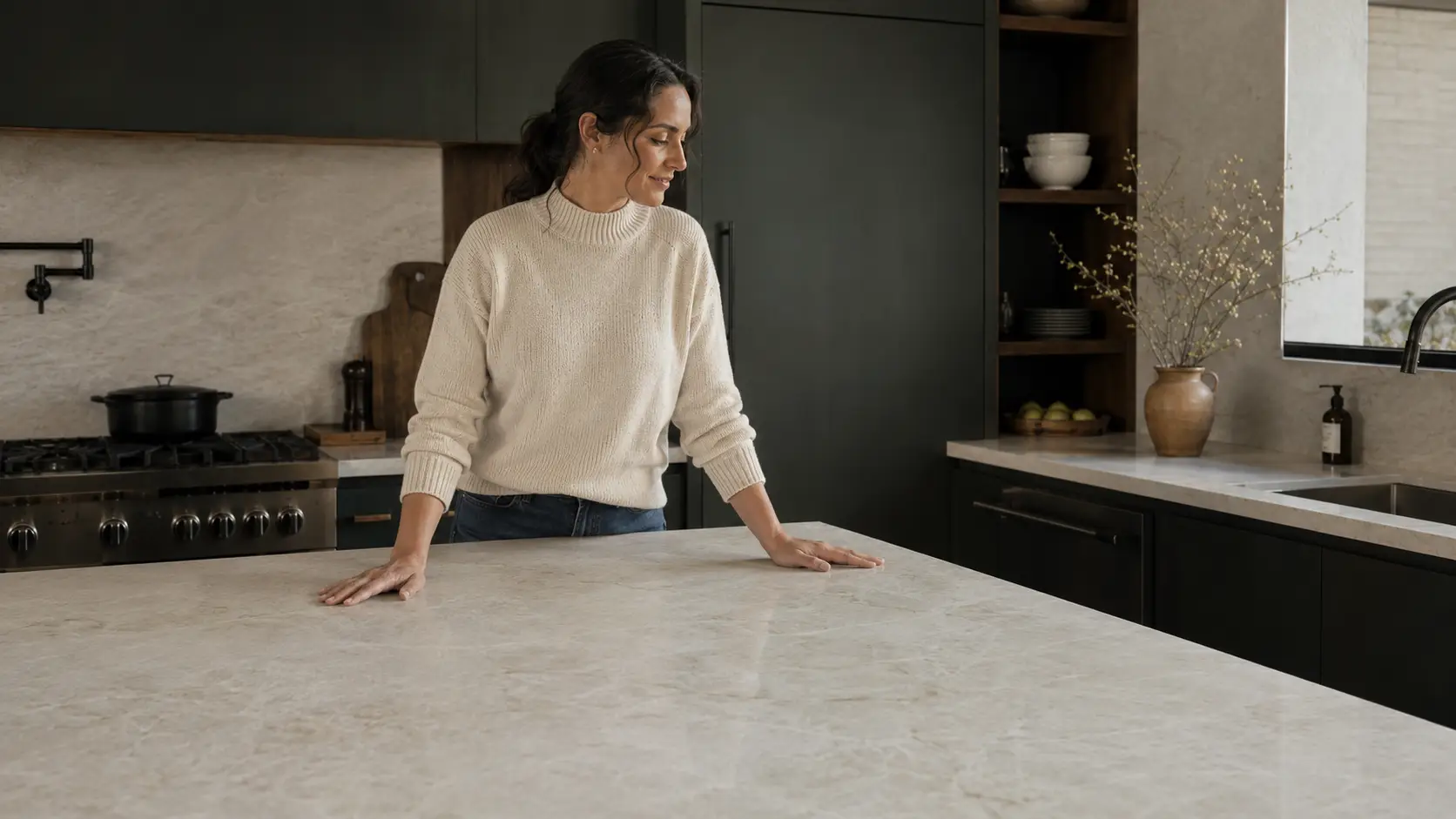
Taj Mahal quartzite comes in three surface finishes: polished, honed, and leathered. The one you choose changes how the stone looks, how it feels, and how much upkeep it asks for. Same slab, three very different results.
This guide breaks down what each finish does, where it makes sense, and how to decide, drawing on the Taj Mahal slabs Pacific Shore Stones distributes across 17 showrooms.
First, What “Finish” Actually Means
A finish is the surface treatment applied to a slab after it’s cut. It doesn’t change what the stone is, only how the top layer reflects light and feels under your hand.
Taj Mahal is a crystalline quartzite quarried in Ceará, Brazil, and quartzite is a dense natural stone that measures 7 on the Mohs scale. That hardness is the same across all three finishes; what changes is the surface porosity and the way the veining reads.
One caveat worth knowing up front: highly metamorphosed quartzites like Taj Mahal are dense and etch-resistant, but some slabs carry small calcium-carbonate inclusions that can etch on contact with acids. Treat Taj Mahal as highly resistant, not guaranteed etch-proof, and know the finish you pick won’t change that.
Polished: Glossy, Vivid, and Low-Effort
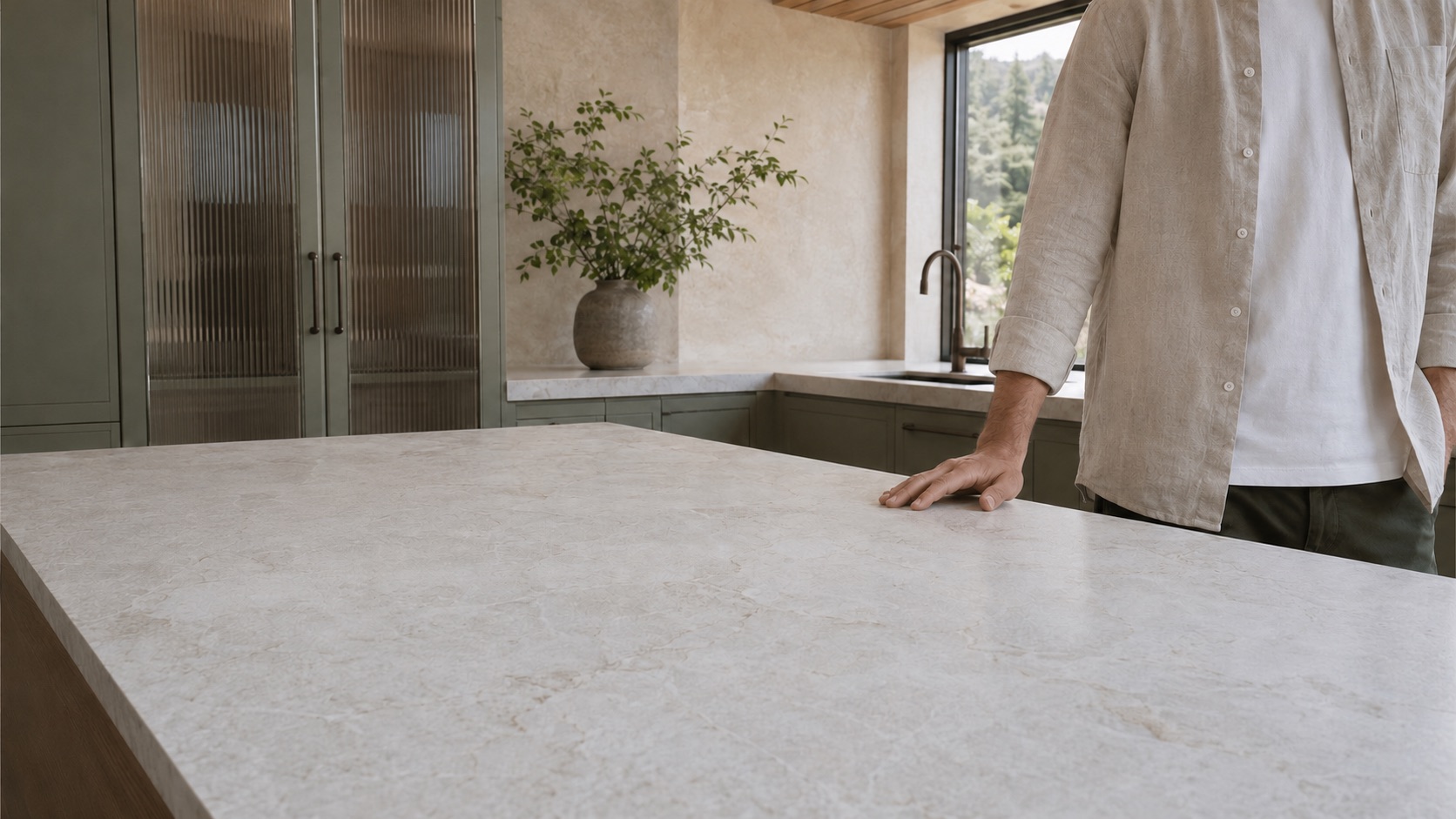
A polished finish is buffed to a high gloss that reflects light, and it’s the surface most people picture when they imagine quartzite. Polishing deepens the stone’s color and makes the gray-and-gold veining read bolder. It’s also the most forgiving for daily cleaning: the glossy surface doesn’t show fingerprints as readily as a dark honed one, and polishing closes the stone’s pores most completely, which helps with stain resistance.
The trade-offs are shine-dependent: a polished surface shows more glare, and it’s more slippery when wet, which matters more for floors than counters. Choose polished when you want the veining to be the star and upkeep to stay simple.
Honed: Soft, Matte, and Understated
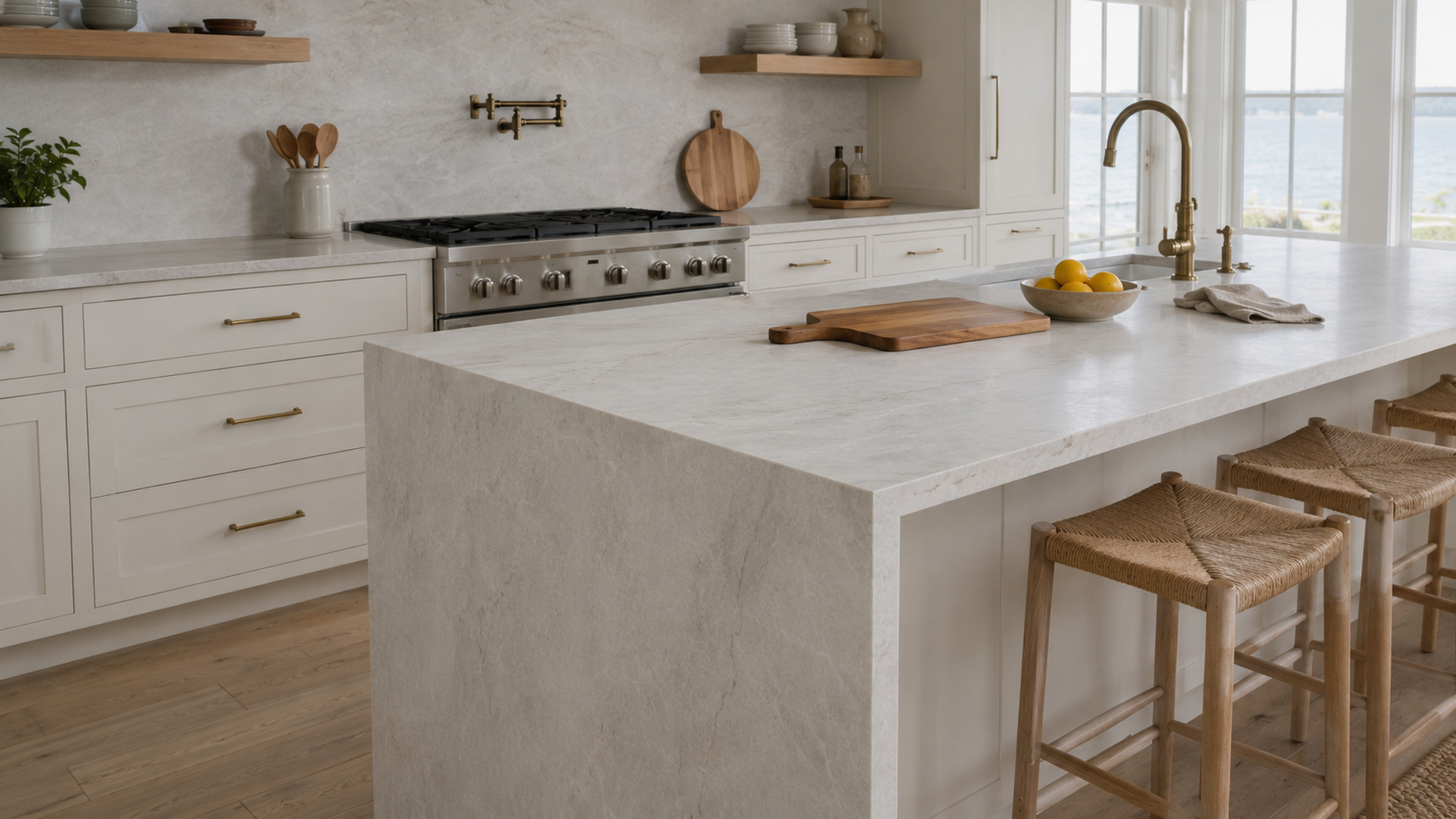
A honed finish is ground to a smooth matte that absorbs light instead of reflecting it, so the veining reads softer and quieter. It suits kitchens and baths going for a calm, contemporary look rather than a glossy one.
The catch is maintenance: a matte surface shows fingerprints, smudges, and water spots more readily, and because honing leaves the pores more open than polishing, spills can absorb faster. On Taj Mahal, that means consistent sealing matters more with a honed top than a polished one. Choose honed when you prefer a matte aesthetic and don’t mind wiping the surface down a little more often.
Leathered: Textured, Tactile, and Forgiving
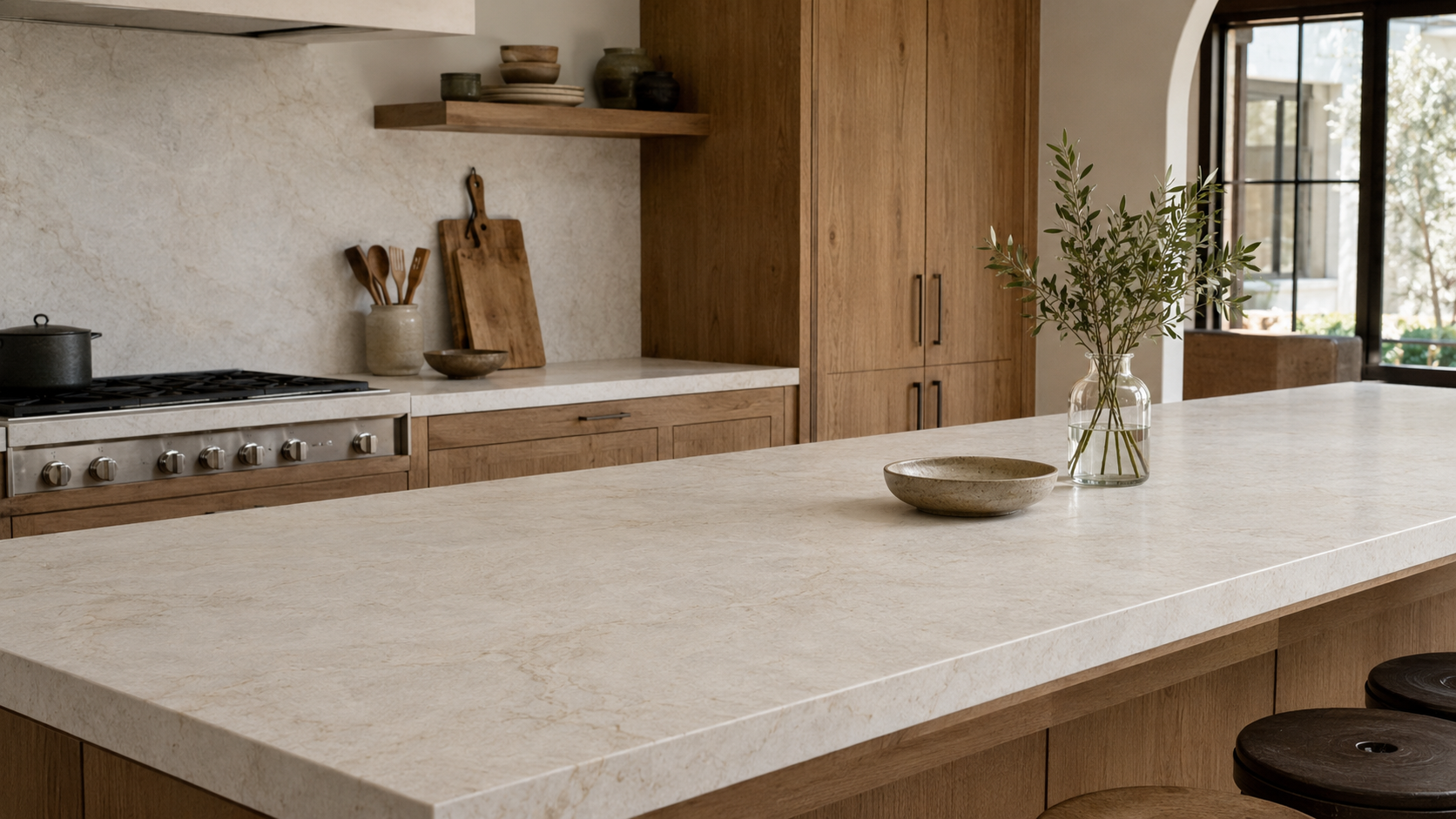
A leathered finish is made by running diamond-tipped brushes over a honed surface; the brushes remove softer mineral particles and leave the harder crystals, creating subtle peaks and valleys you can feel. The result is matte with real texture, and it keeps the stone’s natural color close to how a raw slab looks.
In daily use, leathered hides fingerprints, water spots, and everyday wear better than either polished or honed, and it cuts glare. There are trade-offs: crumbs can settle into the texture, so cleaning takes a bit more attention, and the surface is slightly more porous than polished, so fabricators commonly suggest resealing a leathered top every year or two. Choose leathered when you want a soft, low-glare look that shrugs off smudges, a common pick for busy islands and high-touch surfaces.
How to Choose Your Taj Mahal Quartzite Finish
- For maximum veining and easy wipe-downs: polished.
- For a matte, modern look, if you’ll keep up with sealing: honed.
- For a tactile surface that hides fingerprints and water spots: leathered.
Room matters too. Polished floors get slippery when wet, so many designers hone stone underfoot for better traction. On a kitchen island where hands and glasses land all day, leathered forgives the most.
Whatever the finish, quartzite’s sealing need ranges from none to periodic depending on the slab. The reliable test is simple: if the stone darkens around the sink from water, it’s time to seal. Our guide on how to clean quartzite covers the day-to-day routine, and the Pacific Shore Stones team can point you to the finishes on the slabs currently on display.
See Taj Mahal in Person
Finish is almost impossible to judge from a photo: gloss, matte, and texture all read differently in person and under real light. Pacific Shore Stones distributes Taj Mahal quartzite across 17 showrooms in California, Texas, Oklahoma, Arkansas, Nevada, and Mississippi. Browse our live inventory or visit the Taj Mahal slabs page to see current slabs and finishes.
For layout inspiration once you’ve picked one, see our guide to kitchens with Taj Mahal quartzite.