
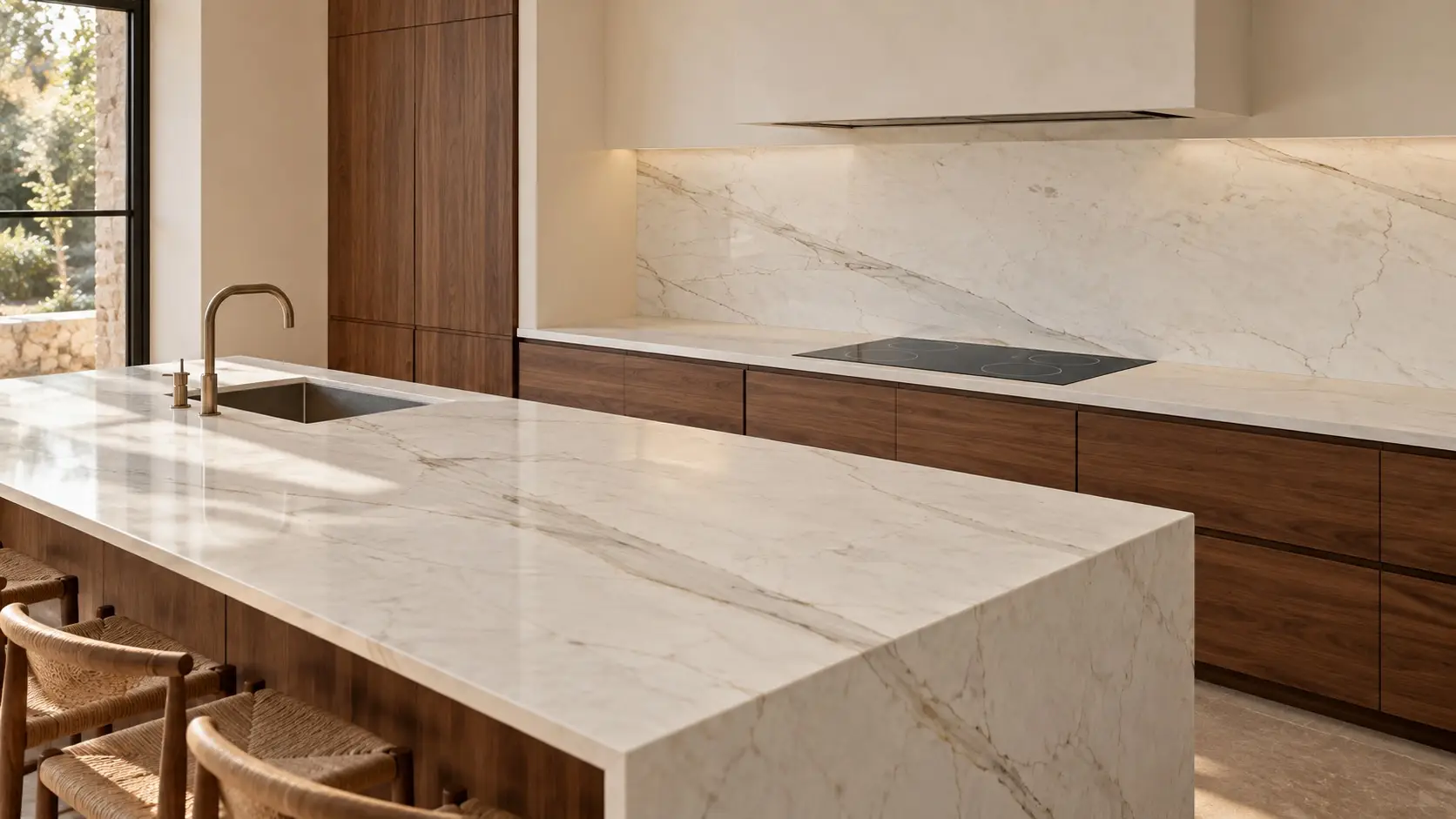
Marble is one of the oldest building materials in continuous use, from ancient Roman temples to today’s kitchen remodels. What makes it compelling and what makes it demanding are the same thing: it is a natural stone with real character, not a manufactured surface with predictable behavior.
At Pacific Shore Stones, choosing marble starts long before a slab reaches the showroom. Our team selects the varieties we carry and guides homeowners, architects, and designers toward the stone that fits how each room will actually be used. This guide classifies the most common types by color and character, so you arrive knowing what to look for.
What Marble Is
Marble forms when limestone is exposed to intense heat and pressure underground. The calcium carbonate crystals recrystallize, and minerals migrate through the rock along paths of least resistance. That migration is what creates the veining. The exact character of that veining, the background color, the thickness and movement of the lines, all depend on the specific minerals present, the geological conditions, and the quarry location.
A few things follow from this that matter in practice:
-
Hardness: Marble sits at Mohs 3 to 4, softer than granite (6 to 7) and quartzite (7+). It scratches more readily and is more vulnerable to impact at edges and corners.
-
Porosity: Marble absorbs liquids. Unsealed marble stains. Even sealed marble absorbs over time as the sealer thins, which is why resealing matters.
-
Etching: Acids react with calcium carbonate and leave dull matte marks on polished surfaces. Citrus, wine, coffee, tomato, and vinegar all etch marble, and etching cannot be cleaned off.
-
Variation: No two slabs look the same. Veining pattern, background tone, and movement vary across slabs from the same quarry. That is why the Pacific Shore Stones team guides clients through selection in person, helping architects, designers, and homeowners compare slabs and choose the right one for each application.
-
Aging: Marble develops a patina from use. High-traffic surfaces trend toward a lived-in quality over time. Some owners embrace this; others maintain against it.
White Marbles
White marble is the most specified category in residential design, and the differences within it matter more than most buyers expect. Pacific Shore Stones carries slabs across the main white varieties at our showroom locations, so direct side-by-side comparison is possible rather than working from photos.
Carrara
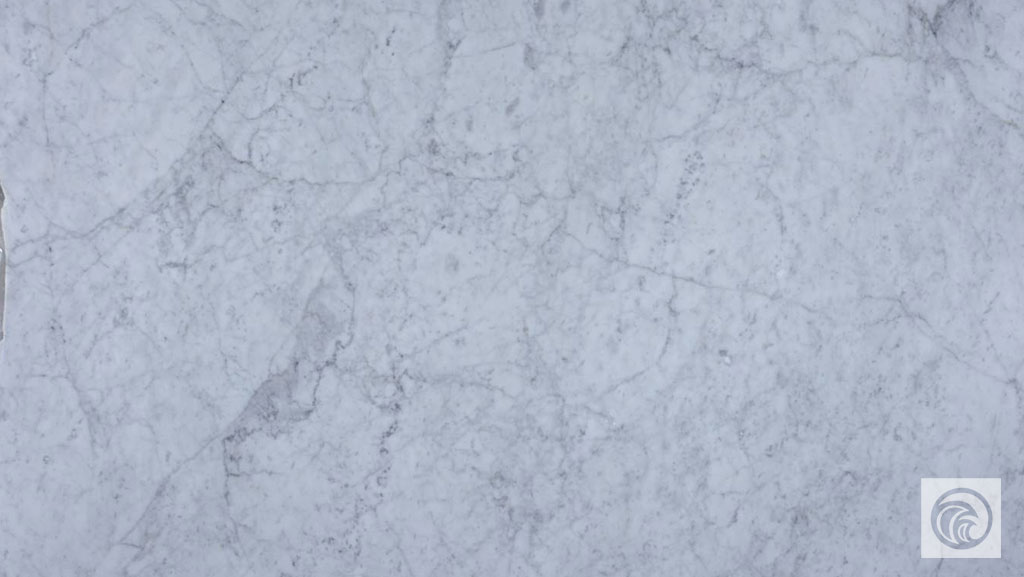
Carrara is the most widely produced white marble in the world, quarried in the Tuscan Apennines near Carrara, Italy. Its background is white to light grey, with soft, relatively fine grey veining distributed across the surface in consistent, feathery patterns. Carrara is the baseline for marble comparisons: widely available, well-understood by fabricators, and more accessible in price than premium white varieties. The tradeoff is porosity. Carrara etches readily from acidic contact and absorbs more readily than denser stones, which means consistent maintenance matters more in kitchen applications than it does in bathroom settings.
Calacatta
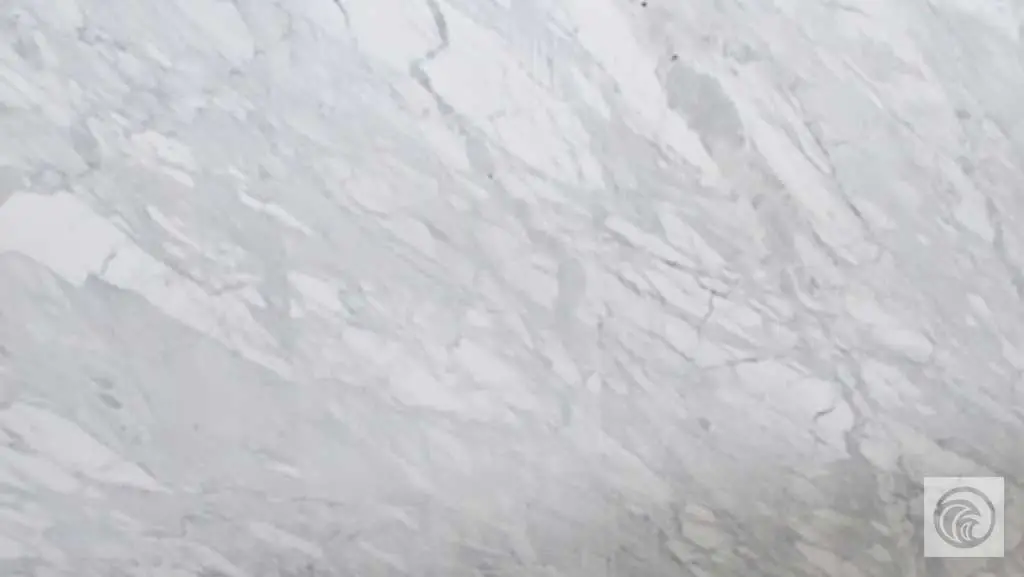
Calacatta comes from the same Tuscan region as Carrara but from distinct quarries that produce a whiter background and significantly bolder veining, with broad movements in gold and grey. No two Calacatta slabs are the same, and the limited quarry output makes it considerably more expensive than Carrara. In kitchens, Calacatta is a statement choice: the kind of slab that becomes the focal point of a design rather than a background to it. Calacatta Gold is a widely specified variant within this family, distinguished by a warmer off-white base and pronounced golden veining that reads differently from the colder, grey-dominant standard. It rewards careful maintenance and rewards seeing the specific slab before committing.
Statuario
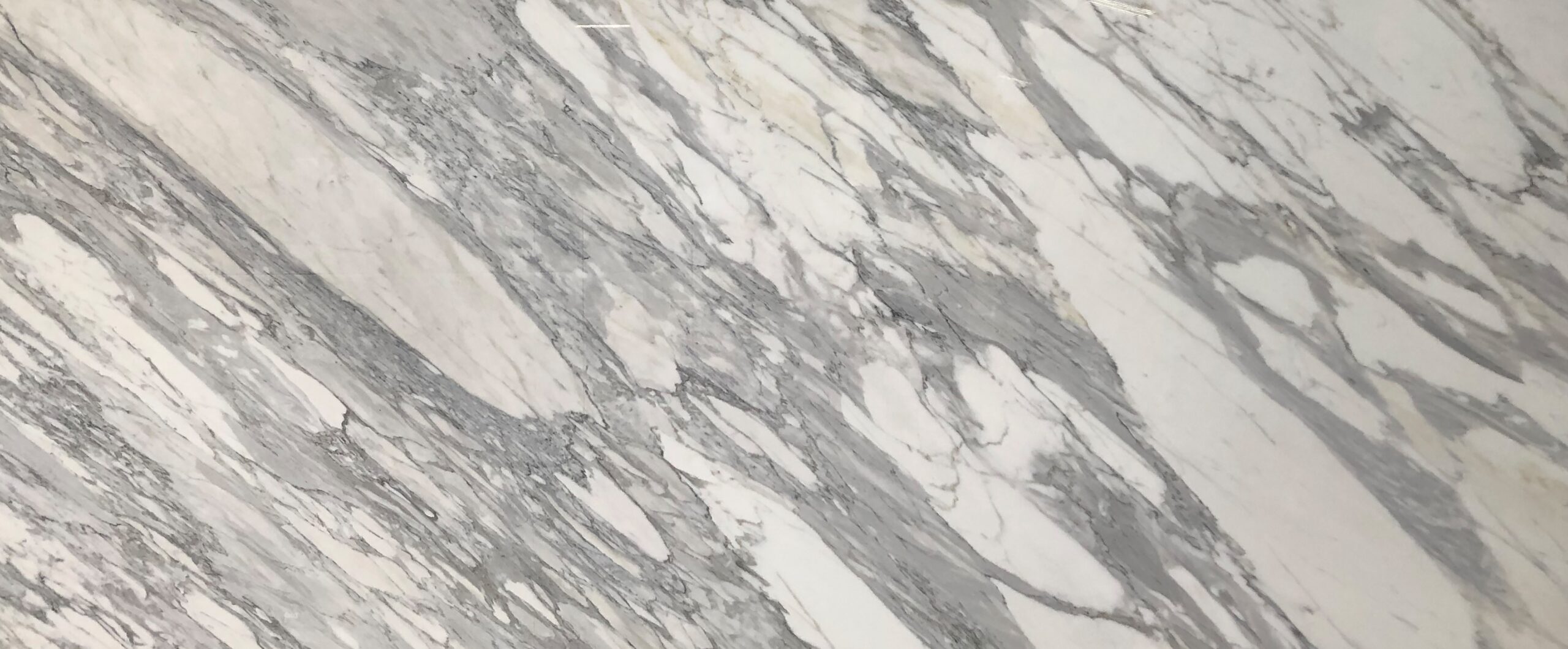
Statuario is the rarest marble from the Carrara region: bright white background, strong grey veining, and a luminosity that made it the preferred stone of Renaissance sculptors. Supply is genuinely limited, pricing sits at the top of the white marble range, and it requires the same disciplined care as any white marble. For projects where the material is the priority and budget follows, Statuario offers something no other white marble does.
Beige and Cream Marbles
Beige marble provides natural stone character with a warmer visual tone that pairs easily with wood cabinetry and warm-toned interiors. For kitchens that want stone presence without the visual intensity of white marble, beige varieties offer a practical middle ground.
Crema Marfil

Crema Marfil is quarried in Alicante, Spain, and has become one of the most widely used marbles in residential and commercial applications worldwide. Its cream-to-beige background carries subtle veining in ivory and light brown tones. The visual consistency from slab to slab is higher than most other marble varieties, which makes it practical for large floor installations, shower surrounds, and continuous countertop runs where matching across multiple slabs matters. It is less visually dramatic than Calacatta but more forgiving to source and fabricate at scale. Like all marble, it etches and requires sealing.
Botticino
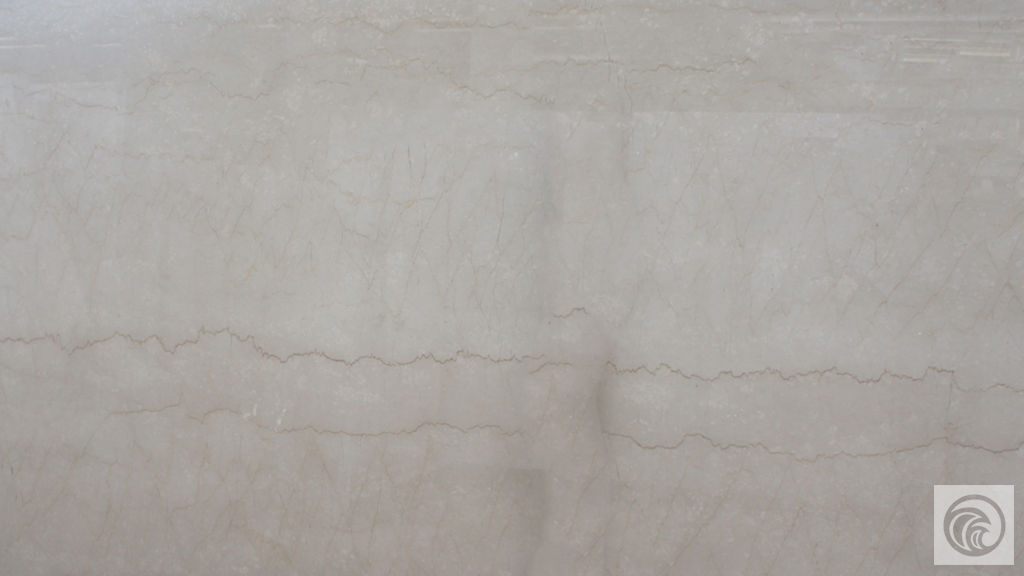
Botticino comes from the Brescia area of northern Italy, with a similar warm beige tone and slightly more visible fossil inclusions and crystalline grain texture. It is used frequently in flooring and wall cladding, where its stable character performs well under high-traffic conditions. Pacific Shore Stones carries Botticino at select showroom locations.
Grey Marble
Grey marble occupies a distinct design space, pairing naturally with both cool and warm interiors depending on the specific stone and veining tone.
Bardiglio

Bardiglio comes from the Carrara region: a dark grey marble with white, silver, or lighter grey veining. It carries more visual weight than white marble while keeping the refined character of a naturally formed stone. The darker background hides water marks and etch marks more readily than white or cream alternatives, which makes Bardiglio a sensible choice for bathroom floors and walls where daily water exposure is high and lighter stone would show more wear.
Pietra Grey
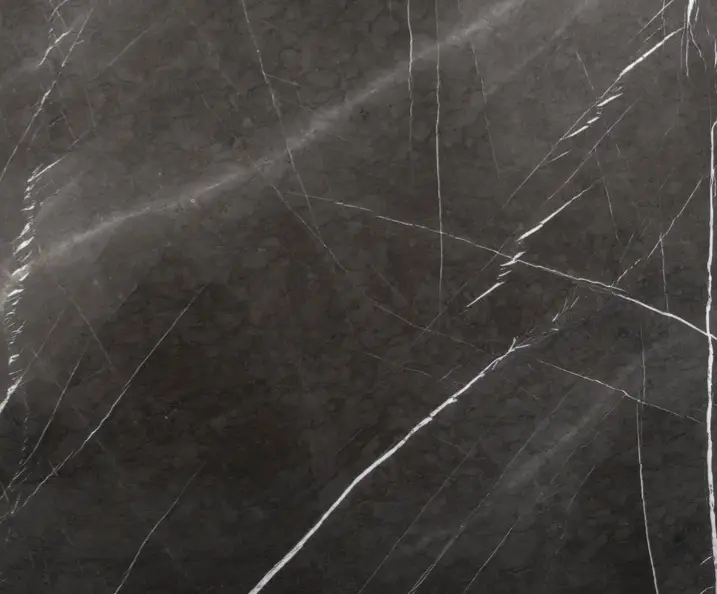
Pietra Grey is quarried in Iran and is among the most uniform grey marbles in commercial use: a compact, dense background in deep graphite tones with thin, barely-noticeable white linear streaks running across the surface. Where Bardiglio reads as stone, Pietra Grey reads almost architectural, closer to a refined solid than a patterned material. It is increasingly specified in contemporary and minimalist interiors where grey is a deliberate design choice rather than a neutral. Pacific Shore Stones carries Pietra Grey at select showroom locations.
Dark Marbles
Dark marbles deliver maximum visual contrast and suit contemporary interiors that want stone presence without the visual lightness of white or cream varieties.
Nero Marquina
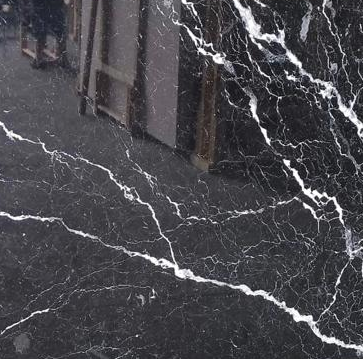
Nero Marquina comes from the Basque Country of Spain, from quarries near Markina-Xemein. The stone is dense black with tight, bright white veining, one of the most visually direct contrasts in natural stone. It is a calcium carbonate stone and etches like any marble, but the dark background makes etch marks far less visible than they would be on a lighter surface. For kitchens that want a bold material statement with a more forgiving maintenance reality, Nero Marquina is worth serious consideration.
Emperador Dark
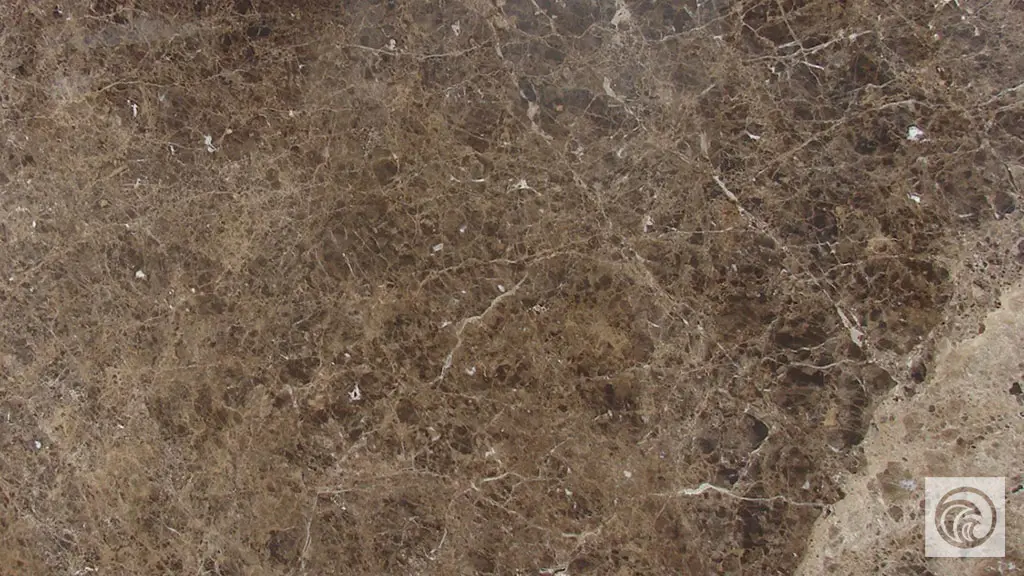
Emperador Dark is quarried in Alicante, Spain: dark chocolate-brown to near-black background with cream and lighter brown veining. The warm undertone makes it distinctly different from Nero Marquina and pairs it naturally with wood tones and warm metal hardware. Both Light Emperador and Dark Emperador versions exist, and the difference in background depth is meaningful for how a room reads.
What Marble Brings to a Space
-
In person, marble has depth, temperature, and light behavior that photographs consistently fail to capture. The polished surface moves light across the room in a way no screen approximates.
-
Marble reads as permanent. It suits applications where that permanence is part of the design intent: kitchen islands as focal points, bathroom vanities with a continuous slab wrapping the backsplash, fireplace surrounds, entry flooring.
-
Marble ages differently from engineered surfaces. A polished counter that sees years of kitchen use develops tonal shifts and a surface quality that reads as seasoned, not worn out. Some homeowners maintain the original finish; others let the patina develop.
-
For bathroom vanities and walls, marble performs at its best: acid exposure is lower, surfaces are smaller, and veining reads beautifully at close range.
-
Pacific Shore Stones carries marble from all major producing regions. Our team can match variety to how a specific room will actually be used.
Caring for Marble
Marble is calcium carbonate, and it reacts with acids. That reaction is called etching: a dull, matte mark left on the polished surface where an acid came into contact with the stone. Etching is not a stain and does not lift with cleaning. It requires professional polishing to restore.
Daily Cleaning
Warm water, mild dish soap, and a soft microfiber cloth. Dry the surface with a clean towel afterward, especially around the sink area, where mineral deposits from tap water accumulate on lighter marble and become harder to remove the longer they sit.
What to Avoid
Vinegar, lemon juice, bleach, ammonia, glass cleaners (Windex included), bathroom cleaners, oven cleaners, abrasive powders, and steel wool. These either cause etching directly, degrade the sealer, or scratch the surface finish over time.
Sealing
Marble should be sealed on installation and resealed as needed. For kitchen countertop surfaces that see daily use, annual resealing is the standard recommendation. A simple test: leave a tablespoon of water on the surface for 15 minutes. If the stone darkens, the sealer has thinned and resealing is due. Sealing reduces absorption but does not make marble stain-proof, heat-proof, or acid-proof.
Protection
Use coasters, cutting boards, and trivets. Protect edges, corners, and sink cutouts from impact. When in doubt about a cleaning product or treatment, contact a Pacific Shore Stones specialist before applying it. Marble is sensitive to products that seem mild and that work fine on other surfaces.
Natural Marble at Pacific Shore Stones
Pacific Shore Stones sources marble from quarries in Italy, Spain, Morocco, and other major producing regions, with current inventory across our 16 locations. Because marble slabs vary meaningfully within a type, our team works with you through the whole selection: comparing slabs side by side, explaining how each variety will behave in a kitchen, bath, or feature wall, and helping architects and designers match the material to the application before anything is cut.
That curation is what a photo gallery cannot give you. Each variety in this guide behaves differently once installed, and the right choice depends on the room, the finish, and how the surface will be used day to day. Our specialists help you narrow the options before your visit, compare the finalists side by side in the showroom, and talk through the trade-offs with you and your architect or designer, so the marble you choose fits the project and not just the photo.
Our materials page shows current inventory by location, and our team can walk through the care requirements and best applications for each variety before you commit.