
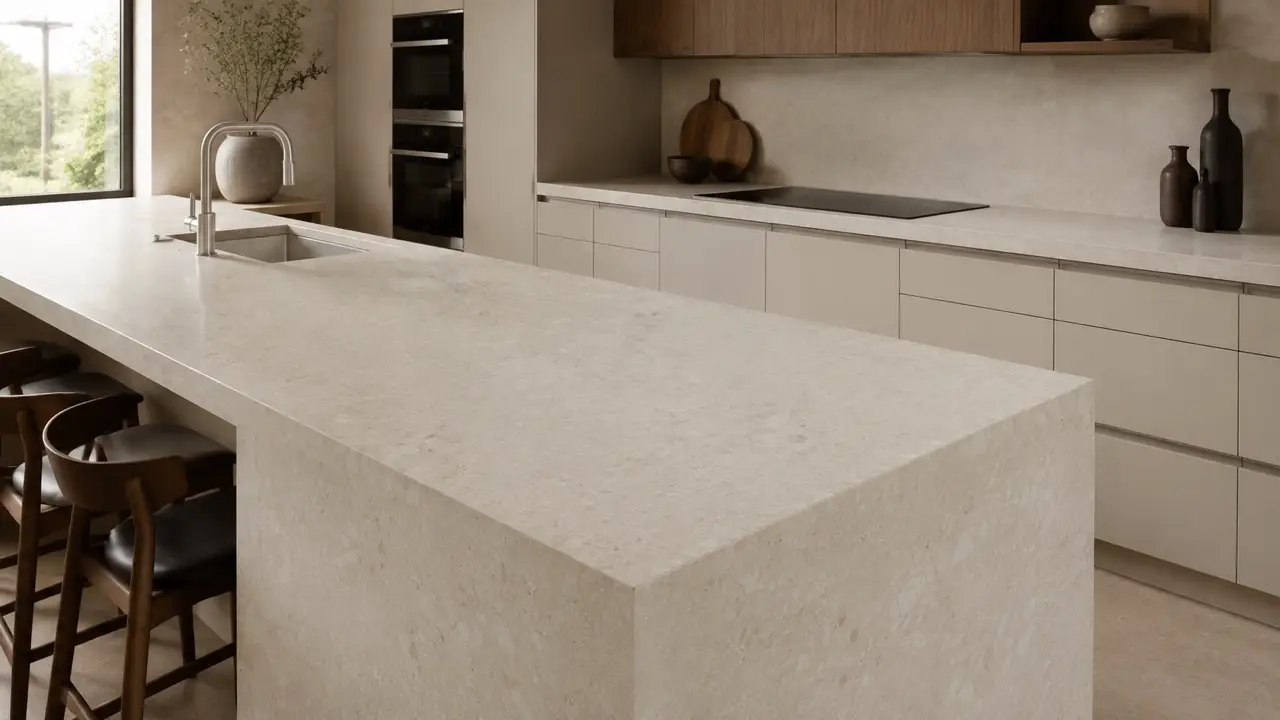
Dekton is available in dozens of colors, and at Pacific Shore Stones the fastest way to find the right option is to filter by three criteria: the desired color family, the finish that best suits your space, and whether the surface will be used indoors or outdoors.
Made by Cosentino through particle sintering rather than a resin blend, Dekton holds its color under heat, sunlight, and heavy daily use, so the shade you pick behaves the same on an outdoor island as it does on a kitchen counter.
Pacific Shore Stones distributes Dekton across its showrooms, and this guide is a dealer’s map of the range: how the colors are grouped, what the main families look like, how finishes shift the read, and the shades that show up most often in real kitchens.
How Dekton’s Color Range Is Organized
Cosentino groups Dekton into design collections rather than a single flat list, which makes the range easier to navigate once you know the logic. Collections like Pietra Kode reinterpret classic stones, Onirika leans into dramatic veined statements, and the Natural and Solid groups cover stone-inspired movement and clean single tones. Each collection carries several colors, and most colors run across more than one thickness and finish.
Underneath the collections sit the color families most homeowners actually shop by. On its official color catalog, Cosentino sorts the palette into color families such as white, beige, grey, black, and brown. For a working kitchen, that usually comes down to five practical families, covered next. For the material background behind all of it, our guide to sintered stone explains how Dekton is made and why it performs the way it does.
Dekton Colors by Family
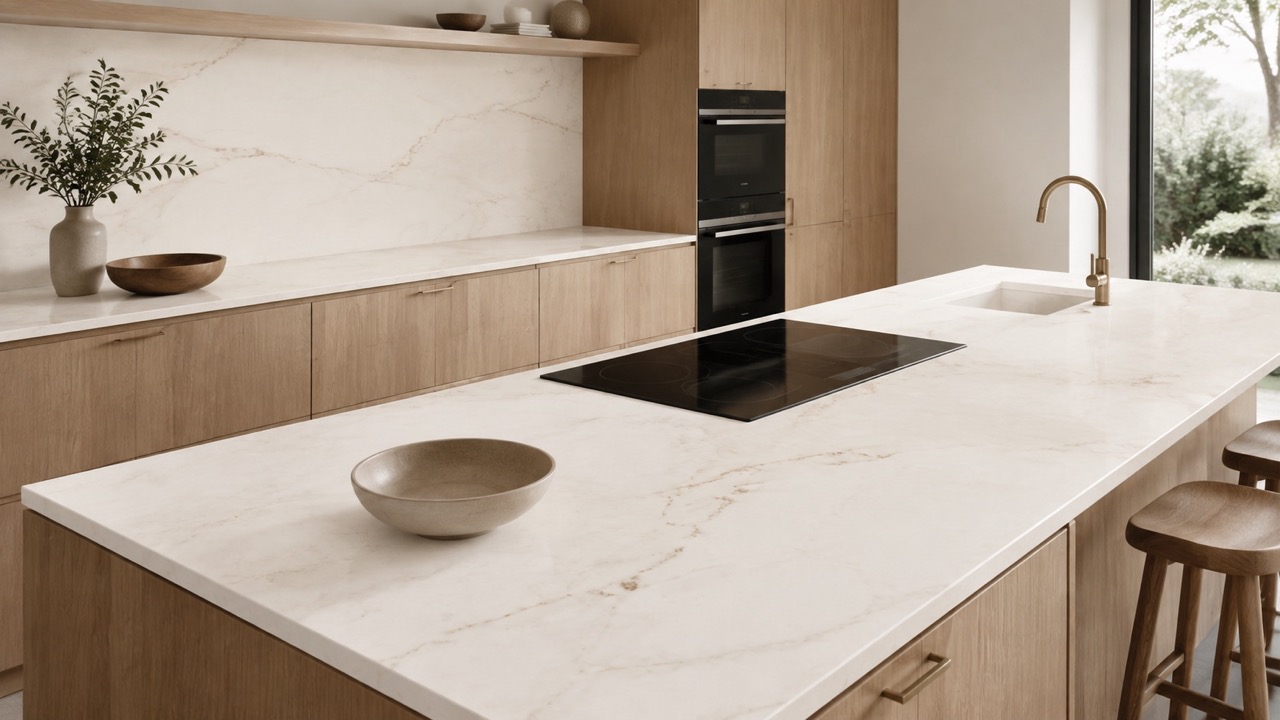
White
The most requested family, and the deepest. Quieter, more solid-reading options like Uyuni and Vigil work as calm, contemporary counters, while Awake, Rem, and Trance carry the same white-to-cream background but with bold, colorful veining, better suited to an island, waterfall, or feature wall than a full run of counters.
Beige
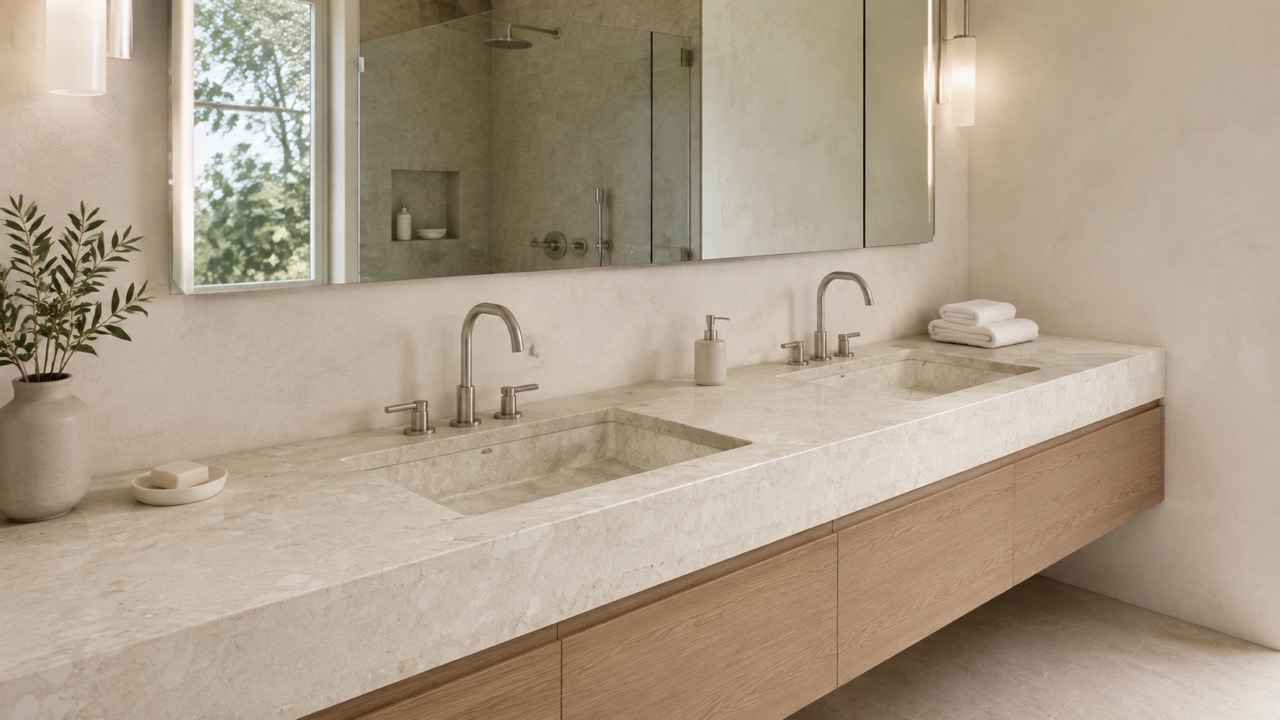
For kitchens leaning warm and organic, creams and taupes like Ava, Sabbia, and Nara add depth without going dark. Marmorio brings a travertine-inspired, lightly striped look in the same warm family, rather than a marble-veined white. These pair comfortably with brass hardware and natural timber, and they hide everyday use better than a stark white.
Gray
Grey is Dekton’s workhorse family. Options range from soft, even greys to an industrial, blue-grey stone look such as Ceppo. These suit modern and transitional kitchens and are forgiving in high-traffic homes.
Black
For contrast and drama, deep charcoals and blacks like Sirius and the dark grey Bromo anchor an island or a full-height backsplash. Matte finishes keep them from showing fingerprints as readily as a polished black stone would.
Brown
Warm, earthy tones for a natural, grounded look. Kedar reads like natural oak, with linear grain and wood-like nuances, while Kira pairs earthy tones with contrasting light grey veining, in the spirit of a Gris Pulpis stone. Both suit kitchens leaning rustic or natural-material forward.
Finish Changes the Color
The same Dekton color reads differently depending on its finish, so choose both together. Cosentino offers four core textures:
-
Matte gives a natural, low-glare look and is the most-specified finish for kitchen counters.
-
X-Gloss is mechanically polished for a luminous, reflective surface that deepens dark colors and bounces light in smaller kitchens.
-
Velvet is a soft, warm-touch matte that sits between the two.
-
Textured Matte or Velvet adds deliberate surface grain for a more natural-stone feel.
A charcoal in X-Gloss looks glassy and dramatic; the same charcoal in Matte reads quiet and modern. Always confirm the finish on a sample, not just the color name.
How to Choose a Dekton Color for Your Space
Three questions narrow the field fast.
Indoors or out? Every Dekton color is UV-stable, so an outdoor kitchen or pool surround can use any shade without fading, including deep blacks that would bleach under sun in a resin-based surface. Our notes on outdoor kitchen design cover why that matters.
How busy is the kitchen? Homeowners with heavy daily cooking often prefer mid-tone greys, taupes, or veined whites that disguise crumbs and water spots between cleanings. Designers specifying for a showpiece island can push toward bold veined colors, since that surface takes less abuse.
What are the cabinets doing? Heavy-grain or dark cabinetry pairs well with quieter Dekton whites and greys, while flat, painted cabinets give a bold veined color room to breathe. For a wider view of how Dekton sits among other hard-wearing options, see our roundup of the best porcelain slab brands.
See Dekton Colors in Person
Renderings flatten stone, and a two-inch chip never shows how a color moves across a full slab. Because Dekton runs in large formats, the veining and tone shift meaningfully from one end of a piece to the other, which is exactly what you want to see before you commit. Pacific Shore Stones keeps Dekton on display across its showrooms, and you can browse current Dekton slabs by location before scheduling a visit through our showroom locations.