
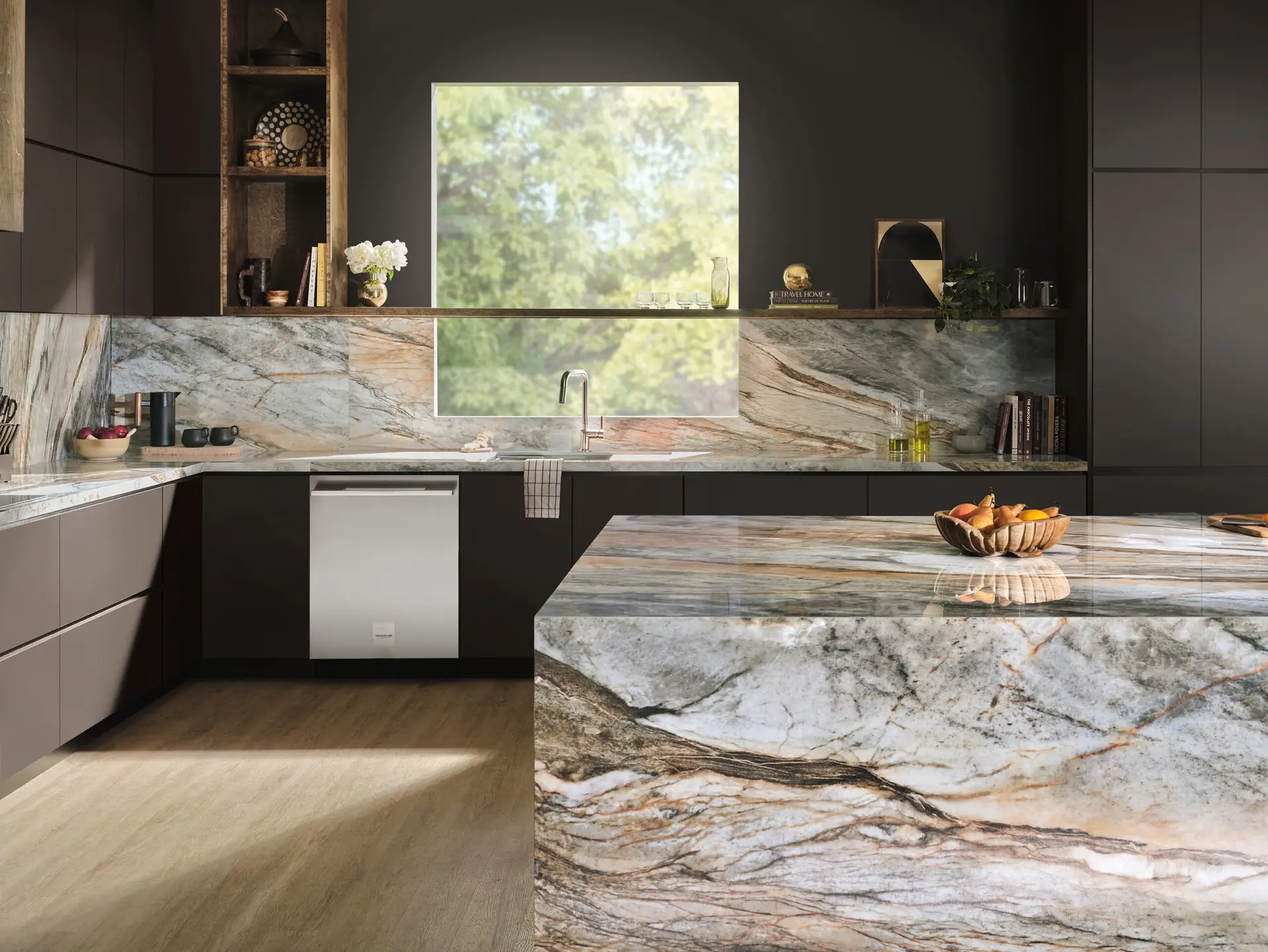
There’s a reason the L-shaped kitchen dominates American homes.
It’s not flashy. It’s not trendy. It’s just… smart. Two walls of cabinetry meeting at a corner. Simple geometry that somehow solves most of the problems kitchens create.
The L-shape works in tiny apartments and sprawling suburban homes. It flows into open living spaces without feeling disconnected. It creates natural workflow without dictating how you cook. And unlike more complex layouts, it doesn’t require architectural gymnastics to pull off.
If you’re planning a kitchen remodel or building new, understanding L-shaped kitchen design principles will help you create something both beautiful and genuinely functional. This guide covers the essentials: layout strategies, appliance placement, material selection, and the common mistakes that turn great layouts into daily frustrations.
Why the L-Shape Works So Well
Kitchen efficiency comes down to one concept: the work triangle.
Your refrigerator, sink, and cooktop form the three points of this triangle. When positioned along two adjacent walls—the L-shape—these work zones create natural flow. You’re not walking across the room constantly. You’re not backtracking. You’re moving efficiently between the tasks that cooking actually requires.
The ideal work triangle keeps total distance between these three points somewhere between 15 and 26 feet. Too compact, and you’re cramped. Too spread out, and you’re exhausted.
Beyond efficiency, the L-shape offers something equally valuable: flexibility. One wall can face a window. The other can open to a dining area. An island can occupy the open space. A peninsula can extend into the room. The basic L accommodates countless variations without losing its fundamental advantages.
Understanding the Core Principles
Before diving into design ideas, get the fundamentals right.
-
Each leg needs adequate length. Plan for at least 8 feet per wall to accommodate appliances, cabinetry, and meaningful counter space. Shorter legs create cramped, frustrating kitchens.
-
The corner requires strategy. That 90-degree junction is either wasted space or valuable storage—depending on your planning. Modern solutions like lazy Susans, pull-out organizers, and magic corner units make corners genuinely useful. Ignore the corner, and you’re losing significant square footage.
-
Ergonomics matter more than aesthetics. Counter height, appliance positioning, storage placement—all of this should serve how your body actually moves. A beautiful kitchen that hurts to cook in fails its primary purpose.
L-Shape Configurations: Finding Your Version
Not every L-shaped kitchen looks the same. Understanding the variations helps you choose what fits your space and lifestyle.
-
The classic L consists of two walls meeting at a corner. Simple, clean, efficient. This configuration works beautifully in small-to-medium kitchens, providing ample storage and counter space while maintaining openness.
-
L-shape with peninsula extends one leg into the room, creating a breakfast bar or additional prep surface. The peninsula defines the kitchen zone without fully enclosing it. Bar seating on one side creates casual dining space perfect for families.
-
L-shape with island adds a freestanding work surface in the center. This configuration demands more square footage—at least 3 feet of clearance on all sides for comfortable movement—but offers tremendous functionality. Islands provide extra counter space, storage, and can incorporate secondary sinks or cooktops.
-
Small-space L-shapes require different strategies. Light colors, reflective surfaces, vertical storage, and ruthless editing of visual clutter make compact L-kitchens feel larger than their footprint. Corner solutions become even more critical when every square inch matters.
Design Ideas by Style
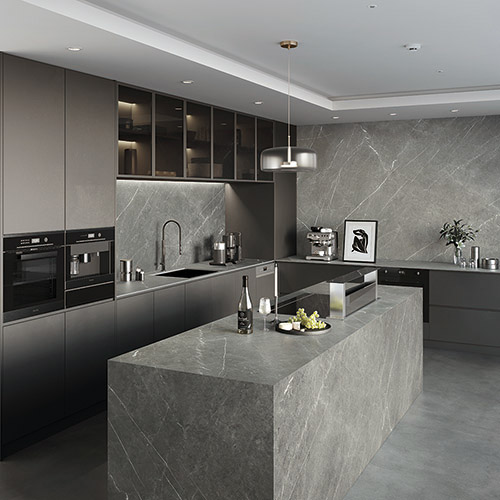
Your personal aesthetic should guide specific choices. Different styles call for different materials, colors, and details.
-
Modern L-shaped kitchens feature clean lines and minimalist cabinetry. White or gray cabinets pair naturally with quartz or quartzite countertops. Handleless doors, integrated appliances, and streamlined hardware create contemporary sophistication. The L-shape’s inherent simplicity suits modern aesthetics perfectly.
-
Transitional designs blend traditional warmth with contemporary clean lines. Shaker-style cabinets in soft neutrals pair beautifully with marble or quartz countertops. This style offers timeless appeal—it won’t feel dated in a decade.
-
Farmhouse L-shapes embrace warmth and character. Natural wood cabinets, open shelving, vintage-inspired hardware, and warm lighting create inviting spaces. Butcher block or honed marble countertops complement the aesthetic.
-
Contemporary minimalist kitchens take restraint to its extreme. Monochromatic palettes, large-format tiles, hidden storage, and integrated everything create serene, uncluttered spaces. This style demands precision—every detail matters when there’s nothing to distract from imperfection.
Choosing Your Countertop Material
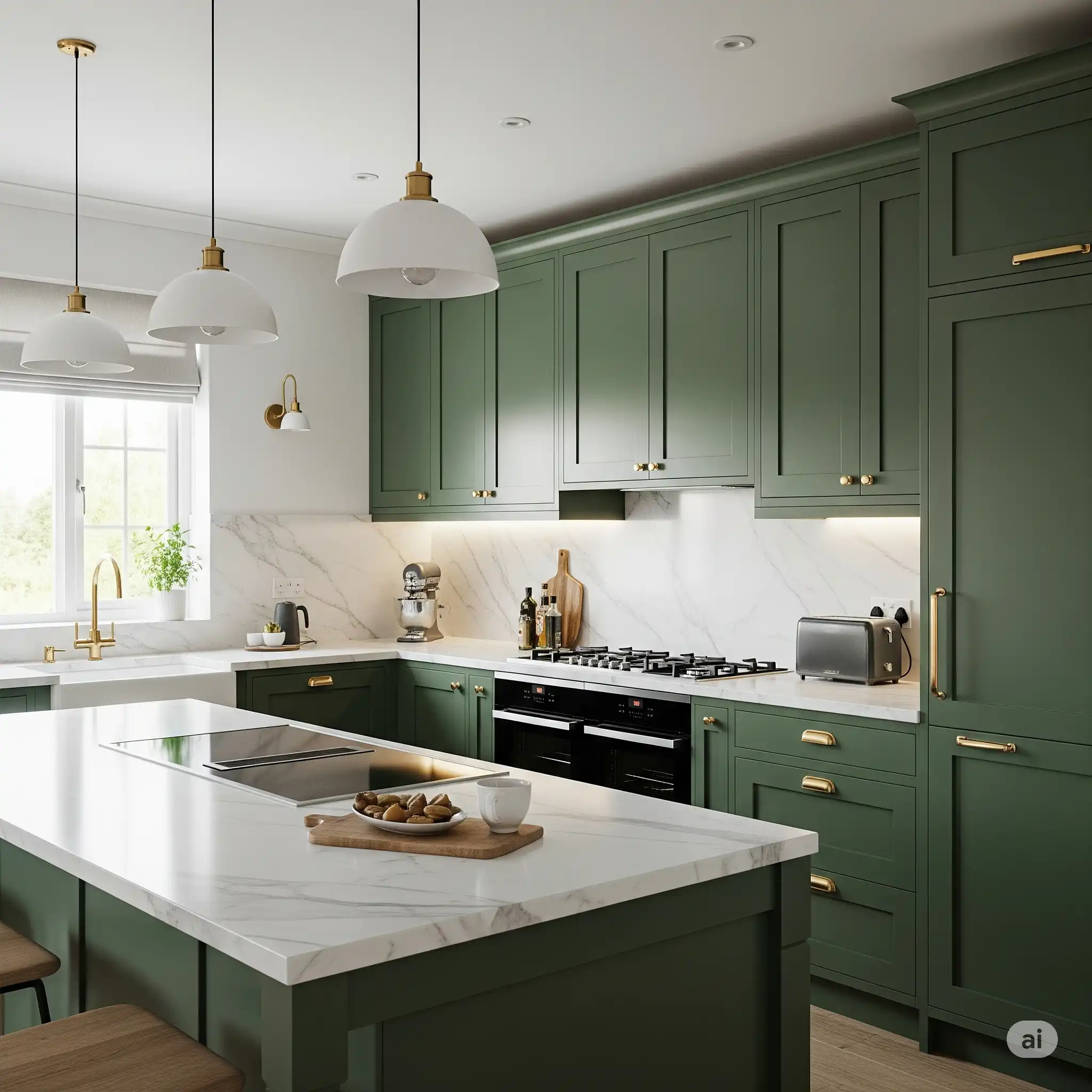
Countertops occupy prime visual real estate and endure daily abuse. The material you choose matters enormously.
-
Quartz delivers engineered consistency. Non-porous (no sealing required), stain-resistant, and available in virtually unlimited colors. Quartz suits modern and transitional L-kitchens beautifully, offering clean aesthetics with practical performance.
-
Quartzite provides natural stone beauty with impressive durability. Harder than granite, each slab carries unique veining and character. Understanding the differences between quartz and quartzite helps you choose which suits your lifestyle and design vision.
-
Granite remains timeless—natural beauty with proven durability. It requires periodic sealing but develops character over time. Granite works particularly well in traditional and transitional spaces.
-
Marble offers unmatched elegance but demands more care. Softer than granite or quartzite, it’s better suited for lighter-use kitchens or homeowners who appreciate natural aging and patina.
Island and Peninsula Options
Adding a work surface to your L-shape increases functionality dramatically—if you have the space.
-
Islands require adequate clearance. Plan for at least 3 feet on all sides, ideally 4 feet for comfortable movement. A typical 4-by-6-foot island provides ample counter space and can accommodate bar seating, storage, or even a secondary sink or cooktop.
-
Peninsulas offer a more space-efficient alternative. Extending one leg of your L into the room, they provide additional workspace and seating without demanding the square footage islands require.
Both options create social hubs. Cooking becomes less isolated when family members can gather at the island or peninsula, participating in meal preparation or simply keeping company.
Maximizing Storage
L-shaped layouts offer excellent storage opportunities—if you plan intentionally.
-
Vertical space often goes underutilized. Floor-to-ceiling cabinetry maximizes storage along both walls. Upper cabinets that extend to the ceiling capture space typically wasted.
-
Corner solutions transform problematic junctions into valuable storage. Lazy Susans, pull-out organizers, and magic corner units make corner cabinets genuinely accessible rather than black holes where things disappear.
-
Drawer organization keeps counters clear. Dividers for utensils, pull-out spice racks, appliance garages—these details make daily life smoother and prevent the clutter that accumulates in unorganized kitchens.
Lighting and Color Strategy
Proper lighting transforms functional kitchens into beautiful ones.
-
Task lighting above sink and cooktop ensures you can see while working. Under-cabinet lights illuminate counter surfaces directly.
-
Ambient lighting—typically recessed ceiling fixtures or statement pendants—illuminates the overall space.
-
Accent lighting highlights architectural features or decorative elements, adding depth and interest.
Color coordination between cabinetry, countertops, and backsplash creates visual harmony. Light colors make small L-kitchens feel larger. Dark colors add drama in spacious layouts. Your backsplash color should complement countertops while adding visual interest through pattern or texture.
Mistakes to Avoid
Understanding common pitfalls saves frustration.
Poor work triangle layout creates daily annoyance. Appliances positioned without considering workflow make cooking harder than necessary.
Inadequate lighting leaves work zones dim and uninviting. Plan lighting as carefully as cabinetry.
Insufficient counter space limits functionality. Don’t sacrifice prep surface for additional storage.
Ignoring traffic flow creates congestion. If your kitchen sits between other rooms, people will walk through. Plan for that.
Choosing materials without considering maintenance leads to frustration. Be honest about what you’ll actually do, not what you aspire to do.
Creating Your L-Shaped Kitchen
The L-shaped layout offers exceptional functionality, flexibility, and design potential. By understanding core principles, considering your lifestyle, and making thoughtful material selections, you create a kitchen that works as beautifully as it looks.
When you’re ready to select countertops and materials for your L-shaped kitchen, seeing options in person makes the difference. Colors behave differently under real lighting. Textures reveal themselves to touch. Scale becomes clear when you’re standing in front of full slabs.
Visit our showroom to explore countertop options alongside cabinetry and backsplash colors. Our design consultants help you navigate material choices, coordinate colors, and plan your layout for maximum efficiency and beauty. Whether you’re planning a complete remodel or refreshing an existing space, we’re ready to help you create the kitchen you’ll actually love using.