
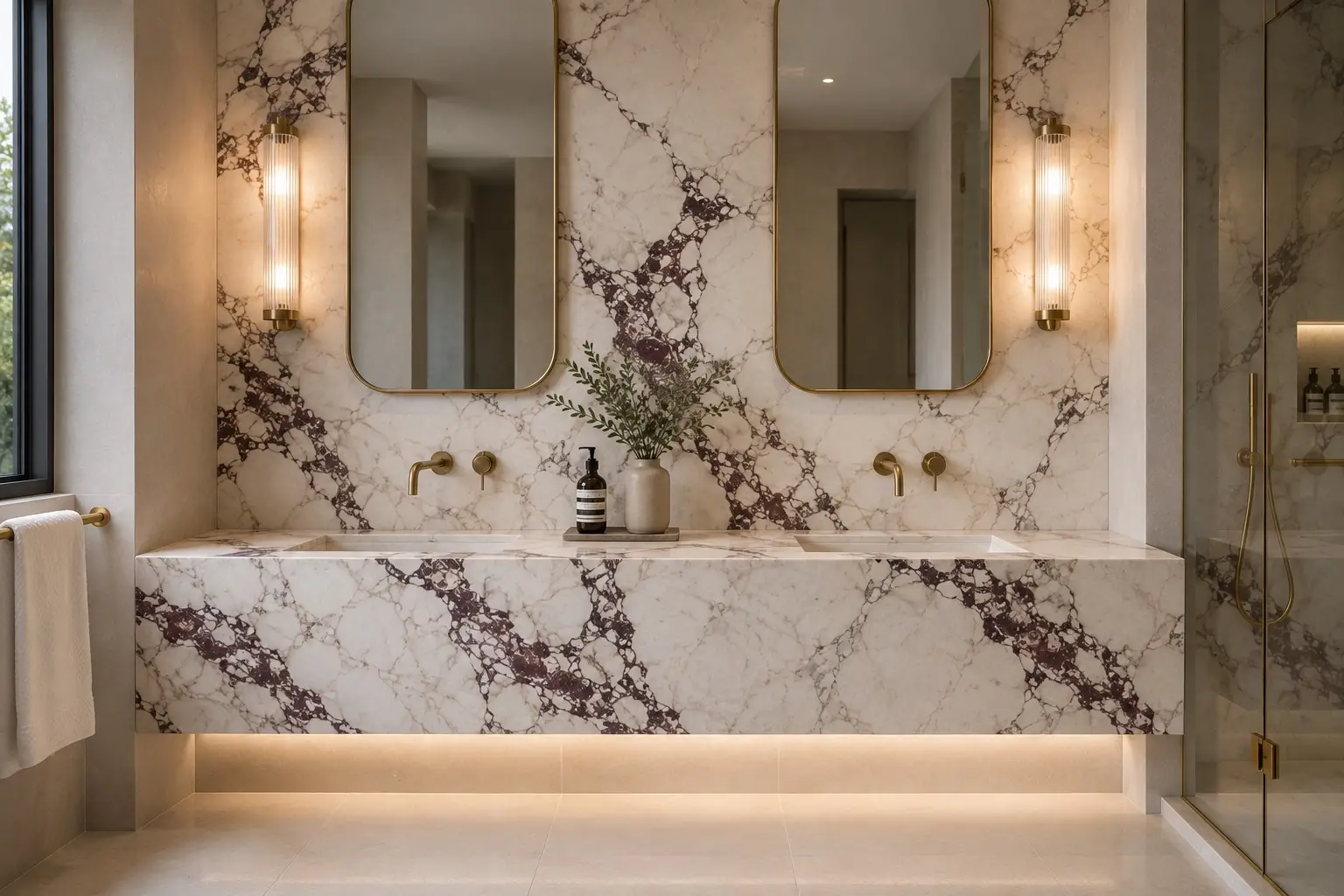
A bathroom is where Calacatta Viola gets to be theatrical. Its wide veins of burgundy, violet, and charcoal turn a shower wall or the space behind a tub into something closer to an art installation, and a fluted vanity carved from it becomes the piece everyone remembers.
A bathroom also asks less of a marble than a kitchen does, which makes it one of the best rooms for a stone this dramatic. This guide covers where Calacatta Viola works in a bathroom and how to live with it, drawing on the Calacatta Viola Pacific Shore Stones distributes across 17 showrooms.
What Calacatta Viola Is
Calacatta Viola is a natural marble, a calcite stone from the Apuan Alps of Tuscany, in Italy. What sets it apart from the calmer Calacatta grades is its color: wide, free-flowing veins in deep violet, burgundy, brown, and charcoal, drawn from iron oxide in the stone, over a bright background. It is a rarer, more exotic variety than a standard Calacatta, which is part of its appeal.
The name also travels beyond the natural stone. The Calacatta Viola look is reproduced in porcelain slabs, such as Atlas Plan’s, and in other engineered surfaces, which behave very differently in a wet room.
Pacific Shore Stones carries the natural marble, alongside porcelain and engineered versions of the look. One thing to check when buying: not everything sold under the Calacatta Viola name is the Italian original, so ask about the stone’s origin. For more on the stone’s character, see our overview on the artistry of Calacatta Viola marble.
Bathroom Ideas by Zone
Because the stone is so expressive, restraint is the strategy. One dramatic surface usually reads as luxurious, while Viola on every wall can overwhelm a small room.
-
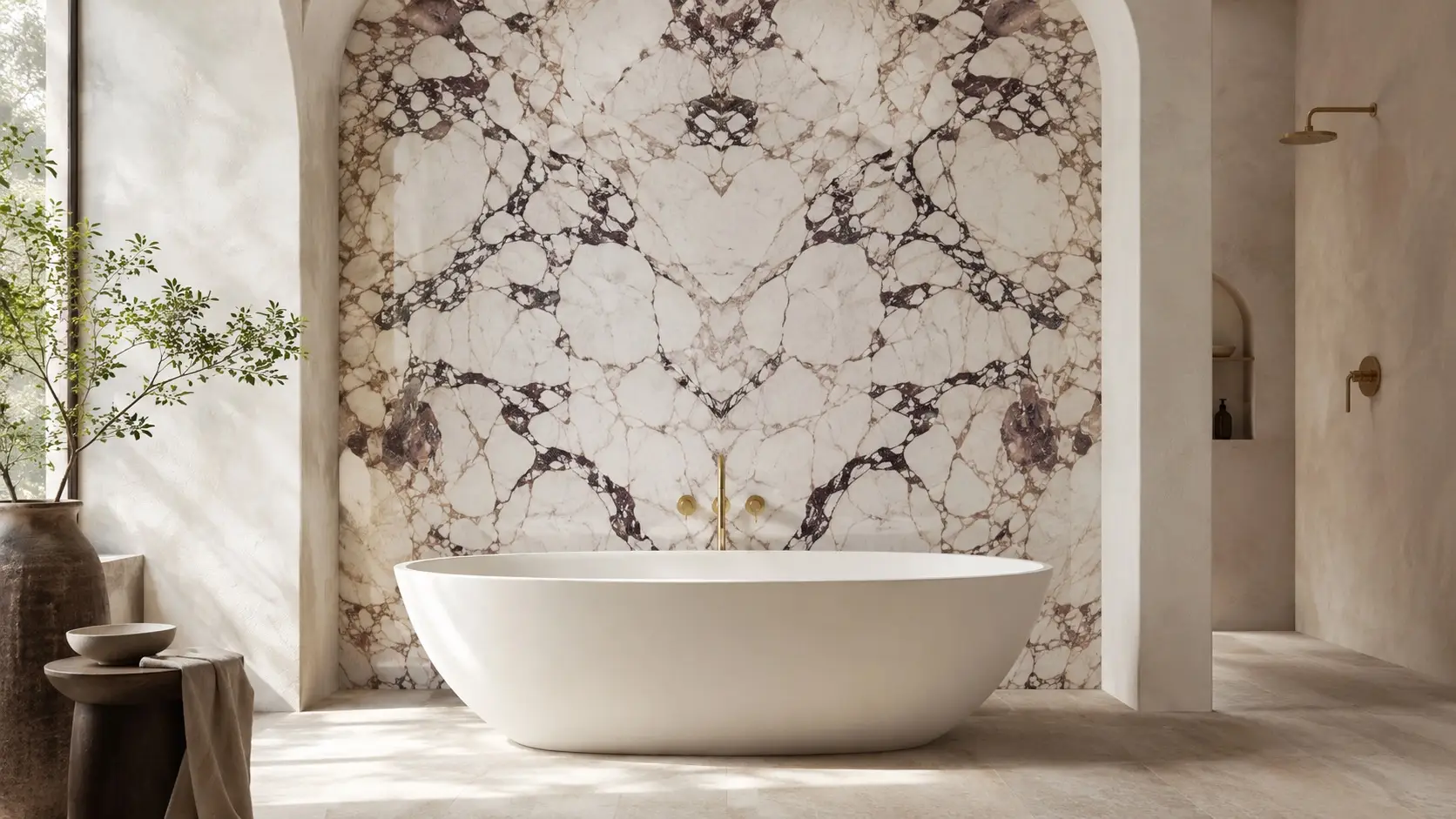
Feature wall behind the tub. A bookmatched Calacatta Viola panel behind a freestanding tub, where two mirrored slabs open symmetrically, is the signature move. The veins read like a framed piece of art and anchor the whole room.
-
A fluted or carved vanity. The current Viola trend is sculptural: fluted vanities and carved vessel sinks that turn the stone into furniture. It brings the drama at a smaller scale than a full wall, and a single carved piece can be the room’s focal point.
-
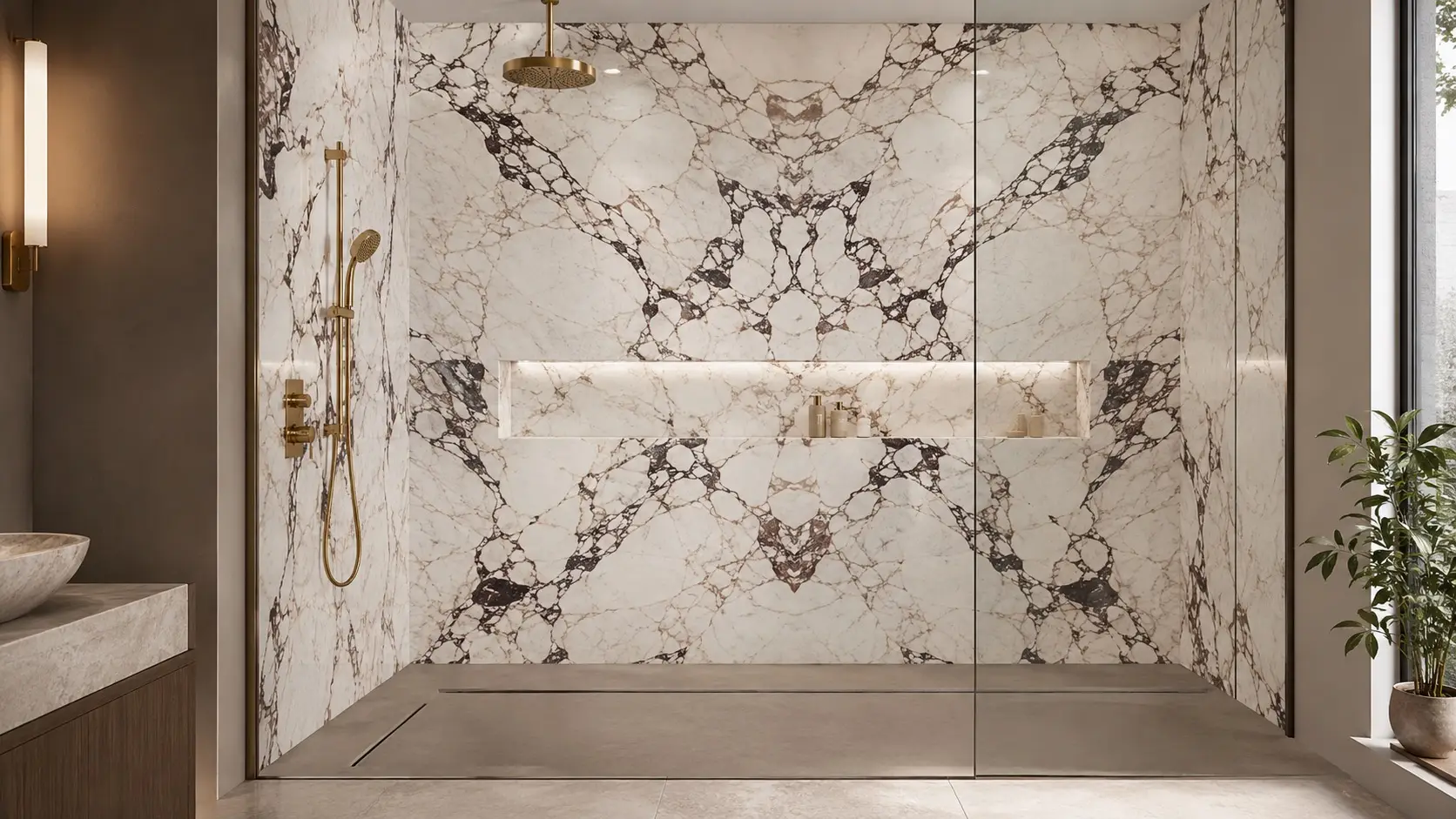
Shower walls. Full-height slabs in the shower, mirrored so the veining opens across the wall, make a showcase. This is also the zone where the material choice matters most, since a shower sees constant water (more on that below).
-
Flooring. Calacatta Viola floors are bold underfoot. Specify a honed finish rather than polished, since honing increases slip resistance on a walking surface and hides water spots, and keep it sealed.
-
Niches and accents. Shower niches, thresholds, and a slim shelf are smart places to use offcuts from the main slab, tying the details together
Pairing a Bold Stone
Calacatta Viola does the design work, so the rest of the bathroom should support it rather than compete. Designers tend to pull the vein color outward: an oxblood or deep-plum paint on the walls or cabinetry amplifies the burgundy instead of fighting it, while a quiet warm white keeps the stone as the sole event.
Warm materials flatter it best, which is why the look often pairs Viola with walnut vanities, patinated or aged brass, and limewashed or plaster walls for a tonal, purple-on-purple effect. Cooler finishes like polished chrome read more modern but can feel colder against the violets. If you want a second stone in the room, warmer companions like Calacatta Gold or Statuario sit alongside it without clashing.
Living With Calacatta Viola in a Bathroom
A bathroom is gentler on marble than a kitchen, but Calacatta Viola is still calcite, so acids react with it. Acidic bathroom cleaners and some products can etch the surface, and the fact that surprises people is that sealing does not stop it: sealing slows staining, but etching is a surface reaction that can still happen on a sealed slab.
Clean only with a pH-neutral stone cleaner, never acidic bathroom sprays, seal the stone and reseal every 6 to 12 months, and use a squeegee after showers to keep water spots and soap scum down.
The shower is the one place to make a real decision. Natural Viola marble in a shower is beautiful but high-touch: constant water, soap, and cleaning products mean sealing and squeegeeing become part of the routine.
If you want the look with far less upkeep in that zone, a non-porous porcelain version of Calacatta Viola is effectively impervious and needs no sealing, though it will not carry the exact depth of a one-of-a-kind marble slab. A common compromise is real marble on the dry feature wall and vanity, with porcelain in the shower.
See Calacatta Viola in Person
Calacatta Viola is all about the veining, and no two slabs match, so the bookmatch and layout should be planned around a specific slab before anything is cut. Pacific Shore Stones distributes the natural marble, along with porcelain and engineered versions of the look, across 17 showrooms in California, Texas, Oklahoma, Arkansas, Nevada, and Mississippi.
Browse the marble collection, check live inventory, or plan the room around a slab in person.