A stone fireplace does more than warm a room; it sets the tone for how the entire space feels and functions. The best ideas start with a mood: modern, classic, or rustic. Then translate that into material, scale, and detailing. From monolithic slabs to softly textured masonry, here’s a refined guide to help you plan a stone fireplace that reads luxurious without feeling overdone.
Define the mood and proportion
Begin by deciding how you want the room to feel. Modern spaces benefit from clean lines, flush hearths, and concealed mantels, which let the stone surface read like sculpture. Traditional rooms often shine with stepped surrounds, subtle profiling, or a framed overmantel that draws the eye upward. Rustic concepts lean into hand-chiseled edges, stacked textures, and a touch of asymmetry for lived-in warmth.
Proportion matters just as much as style. Consider ceiling height, wall width, and neighboring built-ins. A double-height great room can carry a full-height stone chimney breast, while a compact living room might look best with a restrained surround and a single overmantel panel. As a guideline, keeping the surround about one-third to one-half of the wall width prevents the fireplace from feeling dwarfed or overwhelming.
Materials that elevate the room
Limestone offers quiet elegance with a soft, honed sheen and subtle movement. It’s easy to shape into classic profiles and ages gracefully. Pair it with matte black metal accents for a sophisticated, low-contrast look.
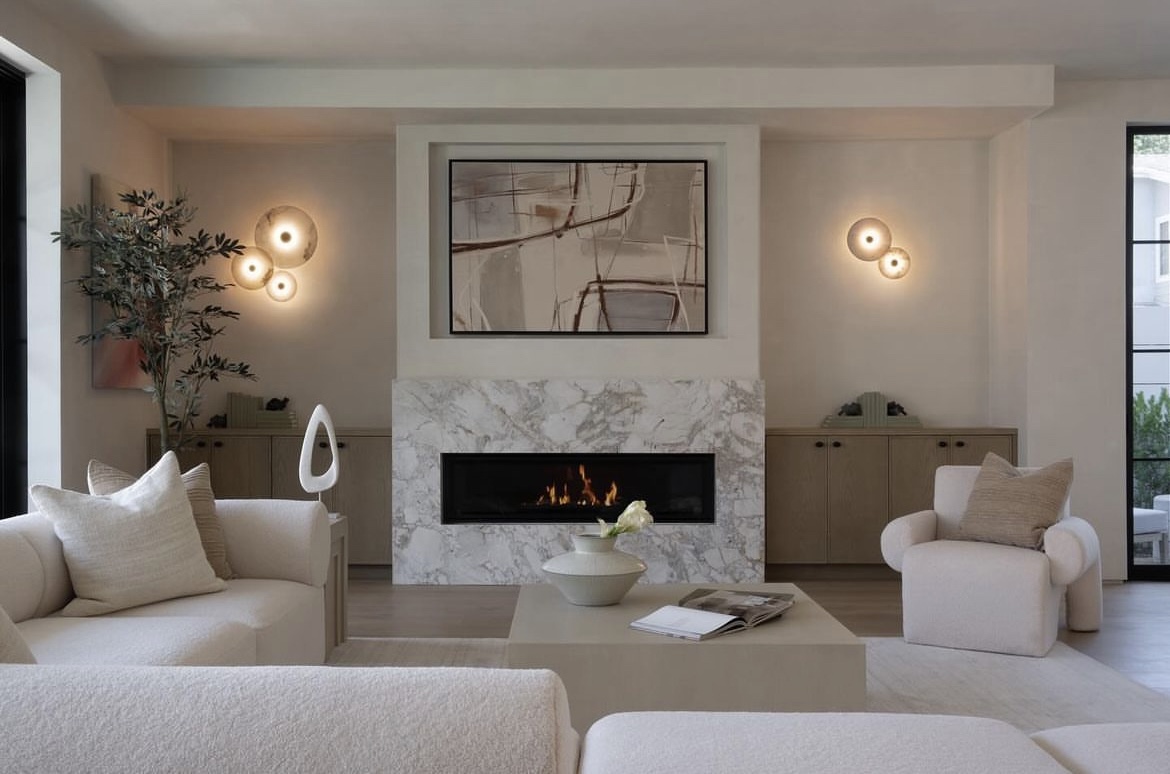
Marble is the choice for drama and polish. If you love couture finishes, explore “calacatta violla”; its burgundy-violet veining set against a creamy base can turn the fireplace face into a piece of art. Bookmatching the slabs across the centerline creates a mirrored pattern that stops guests in their tracks. Check our finest Calacatta Cielo Marble.
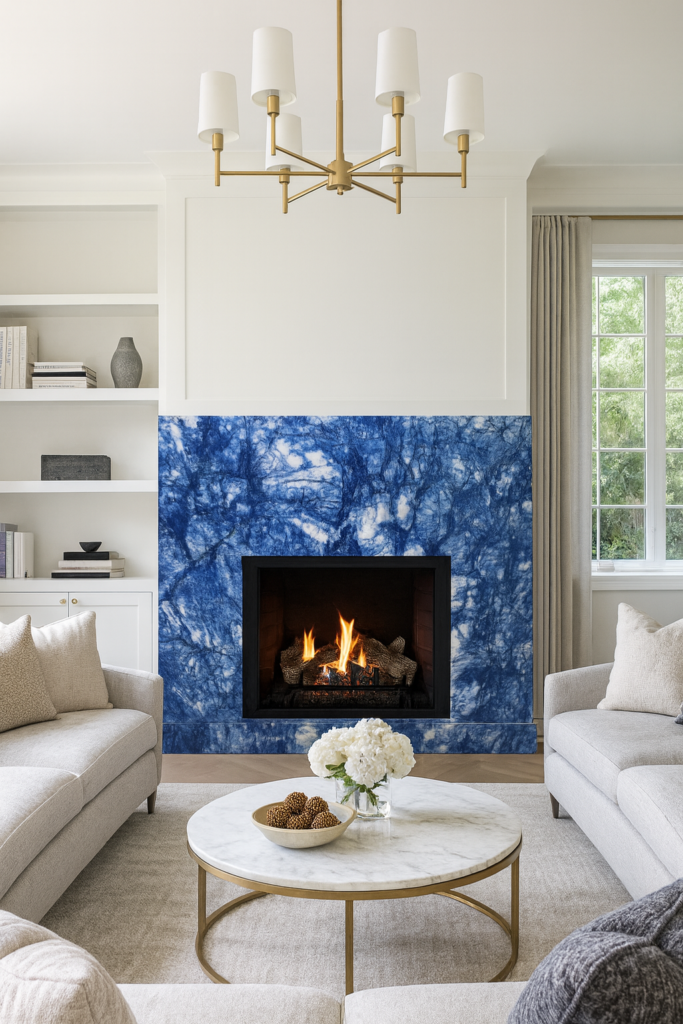
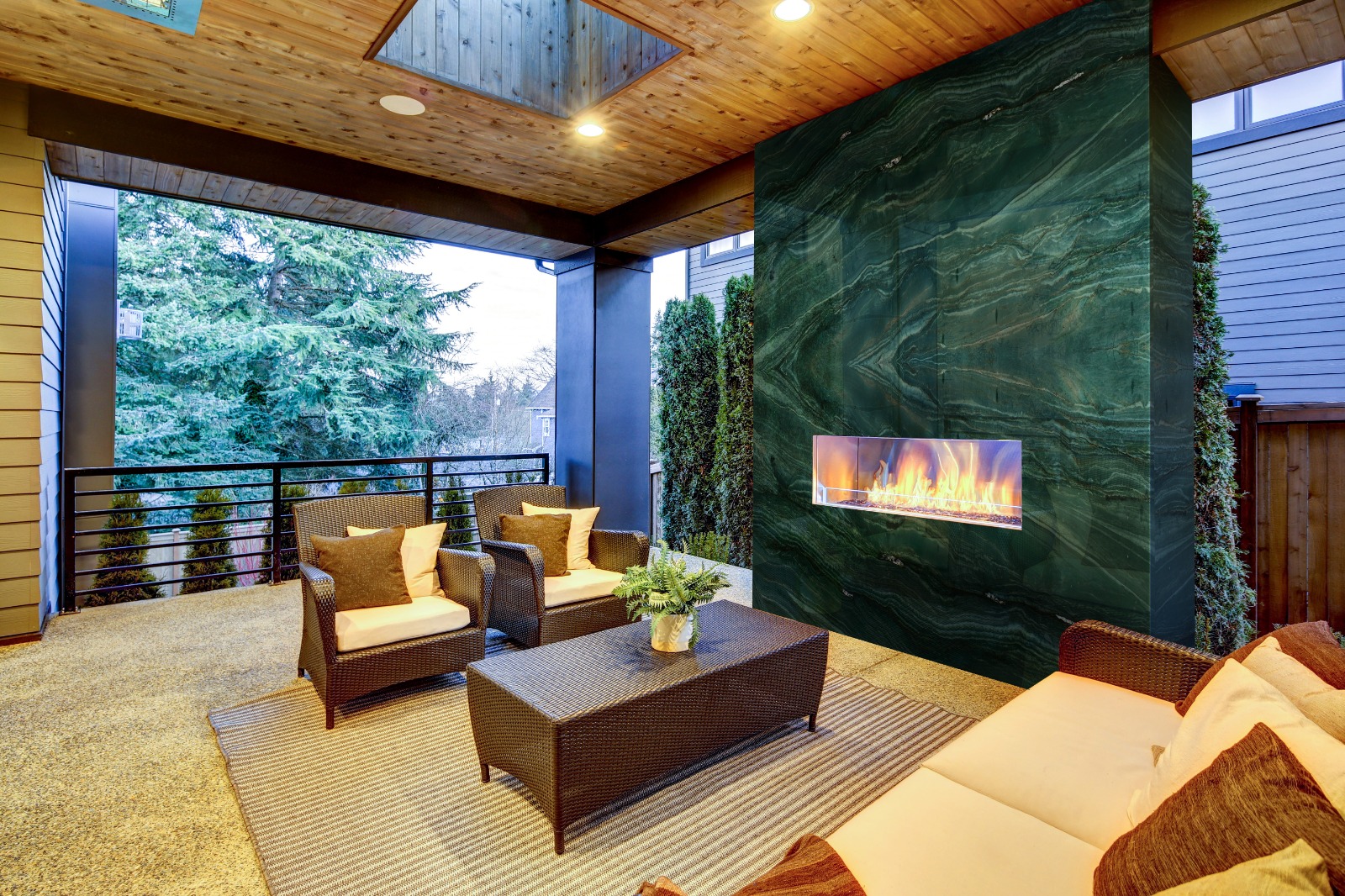
Quartzite brings striking veining with excellent durability and heat resistance. A surface like “dark allure quartzite” delivers a deep, inky tone with luminous streaks, perfect for contemporary interiors that need a crisp focal point without the fragility of softer stones.
Granite remains a reliable pick for high-traffic family rooms. Choose flamed or leathered finishes to add tactility and to minimize fingerprints near the firebox opening. Check our content comparing Granite vs Quartz.
Sandstone is ideal for relaxed, organic interiors. If you’re exploring sandstone fireplace ideas, look for wide lintels, eased edges, and a honed finish that keeps the palette soft and airy, great for coastal or desert-modern schemes.
Stone fireplace design ideas with staying power
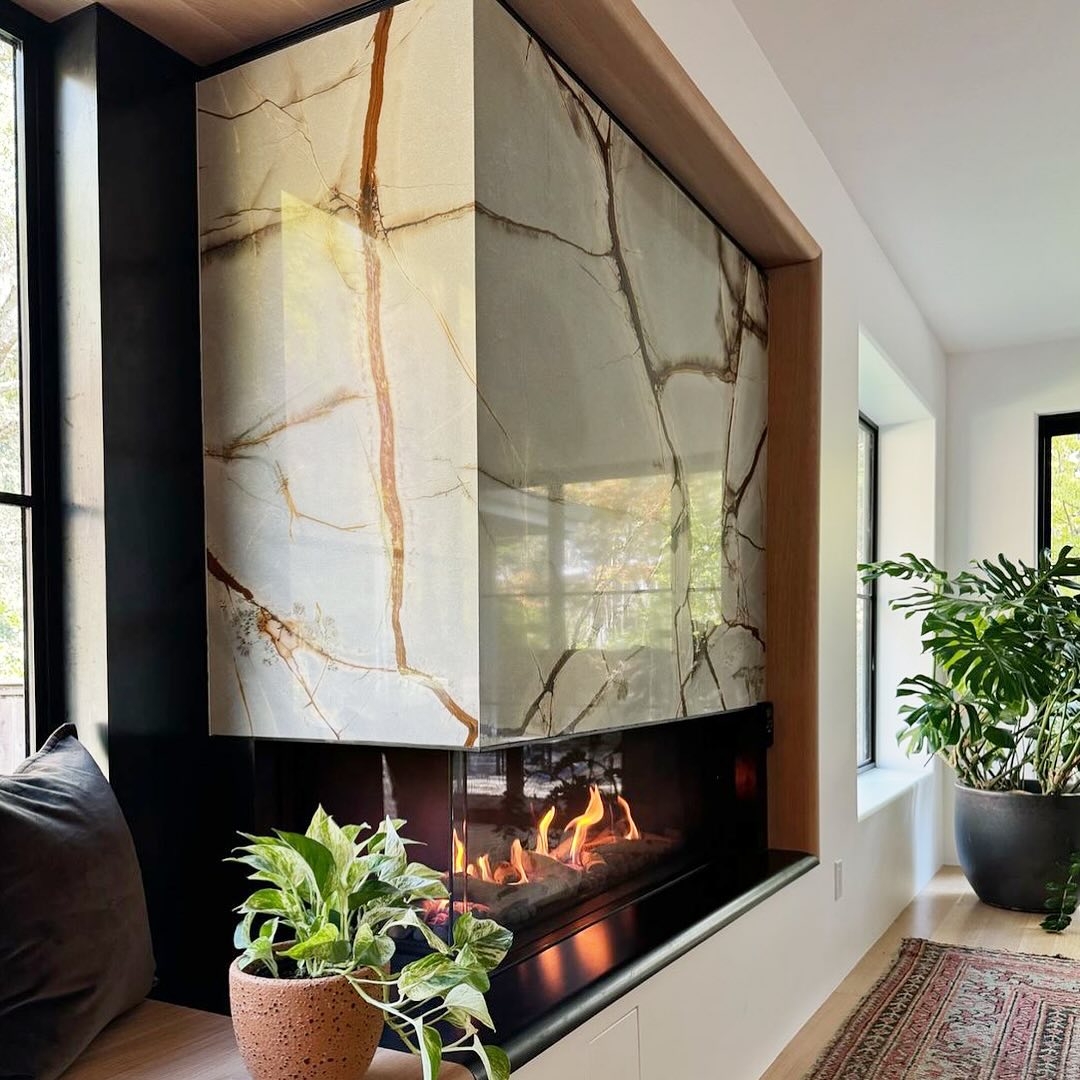
Think beyond the basic surroundings. A monolithic slab face with mitered returns feels gallery-grade and reduces visual noise from seams. Framing the firebox like a picture, then carrying stone upward into a slim overmantel panel, emphasizes verticality without heavy ornament. Extending the hearth to one side doubles as a low bench for wood storage or extra seating and visually balances a media wall.
For those who prefer texture, a stacked or split-face stone chimney breast adds depth that reads beautifully in both natural daylight and evening accent lighting.
Mixing materials can also sharpen the look. A thin blackened-steel reveal shadowing the stone edge gives the impression of custom metalwork and protects corners. If you plan to mount a TV or art above the opening, consider a shallow recess or a slim stone shelf to deflect heat while keeping the face visually continuous.
Practical details that make a difference
Performance starts with clearances. Every firebox, gas or wood-burning, comes with manufacturer guidelines for non-combustible zones; follow them closely. Finish selection matters too. Honed or leathered surfaces tend to resist visible etching and fingerprints better than high polish, especially in busy family areas. Sealers should be breathable and reapplied on schedule; your fabricator can recommend a formula compatible with your specific stone.
Plan the seam layout before fabrication. Aligning joints with architectural lines, mantel height, shelf edges, or the top of nearby built-ins makes seams feel intentional.
Good lighting elevates everything: soft uplights or a pair of discreet picture lights aimed at the face will graze the surface and reveal the stone’s movement after dark.
Color and styling, without clutter
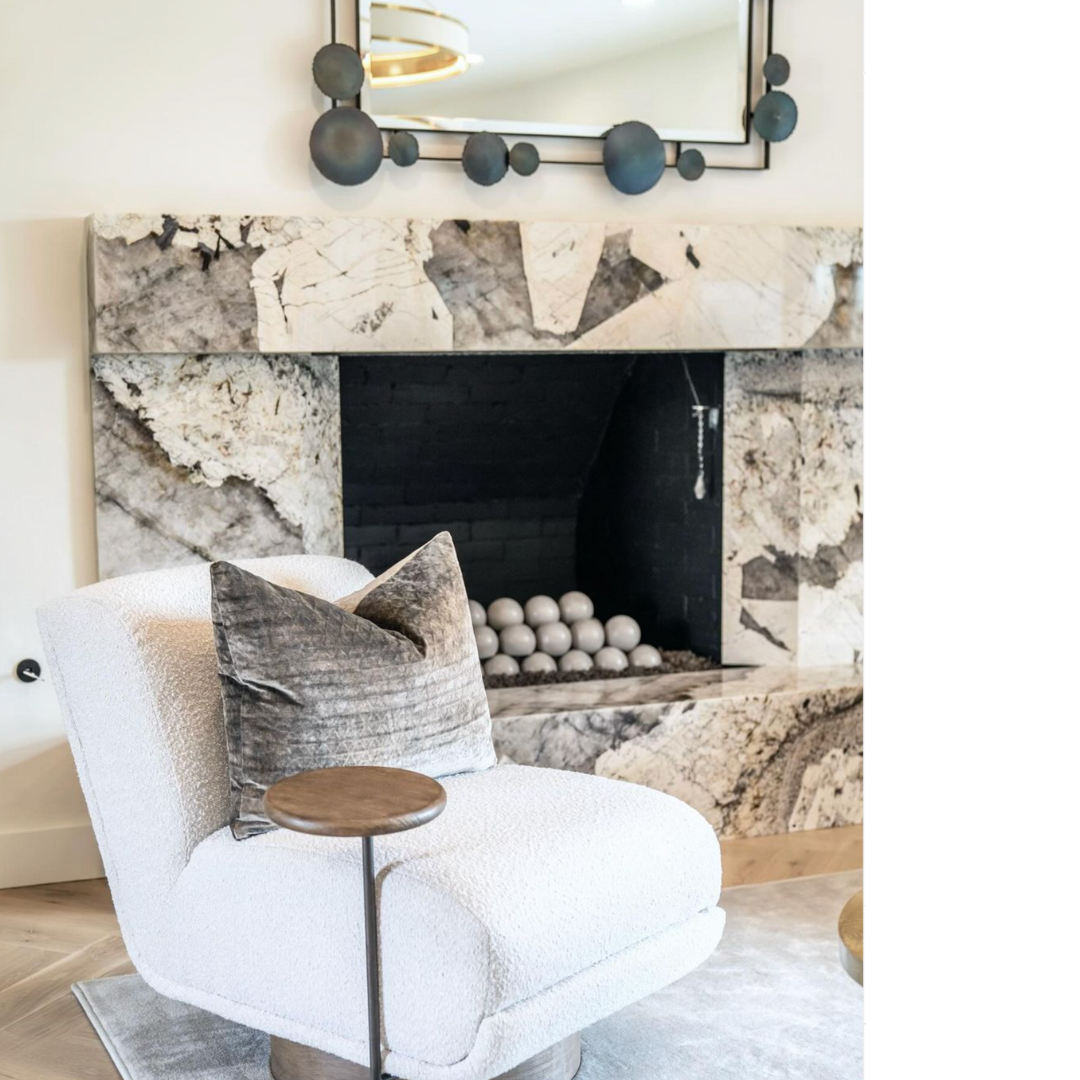
Let the stone lead the palette. Warm limestone and sandstone pair naturally with oak floors, oatmeal textiles, and burnished brass. If you favor bold contrast, deep quartzites stand out against charcoal walls and smoked glass accents. When working with a statement marble such as calacatta cielo, keep adjacent surfaces calm, plaster walls, linen upholstery, and toned-down rugs help the veining take center stage.
Mantel styling should be edited. A mantel-less installation looks museum-clean; one large artwork or a minimal mirror is usually enough. For a more collected feel, a balanced trio, sculptural vase, low bowl, and a single framed piece, adds personality without fighting the stone.
Indoor vs. outdoor considerations
Indoors, the focus is on finish and fine detailing: tight reveals, flush transitions, hidden wiring for lights or sound. Outdoors, weather resistance and texture come first. Choose stones and finishes rated for the elements and consider bolder textures that read from a distance. A raised hearth can act as extra seating around a covered terrace, while a two-sided outdoor fireplace can divide lounge and dining zones without blocking views.
Bringing your vision to life
Selecting stone is a sensory process. Veining, color, and texture shift with daylight, lamp temperature, and flame. Bring fabric swatches and flooring samples to judge undertones accurately, and map a cut plan so the most dramatic areas of veining land at eye level. Our team can help you weigh the best stone for your fireplace ideas.
Visit any Pacific Shore location and experience full slabs, compare finishes side by side and have expert assistance. Book an Appointment!