They’re one letter apart. They sound nearly identical. And they confuse almost everyone.
Quartz and quartzite sit at the top of most countertop wish lists—but for completely different reasons. One is engineered for consistency and convenience. The other is nature’s answer to people who want marble’s beauty without marble’s fragility.
Choosing wrong means living with regret every time you walk into your kitchen.
This guide cuts through the confusion. By the end, you’ll understand exactly how quartz vs. quartzite compare on the factors that actually matter: appearance, durability, heat resistance, maintenance, and cost. More importantly, you’ll know which one fits your life.
The Fundamental Difference: Factory vs. Earth
Everything else flows from this single distinction.
Quartz is manufactured. In a factory, workers combine roughly 90-95% ground natural quartz crystals with 5-10% polymer resins and pigments. The process allows precise control over color, pattern, and consistency. What you see in a sample is exactly what you’ll get in your kitchen.
Quartzite is quarried. It starts as sandstone, then spends millions of years under intense heat and pressure deep underground, transforming into dense, crystalline rock. Workers extract it in massive blocks, slice it into slabs, and polish it. Every piece carries unique veining, color variation, and character that no factory can replicate.
One offers predictability. The other offers authenticity. Both have their place.
Appearance: Consistency vs. Character
Your design goals should drive this decision.
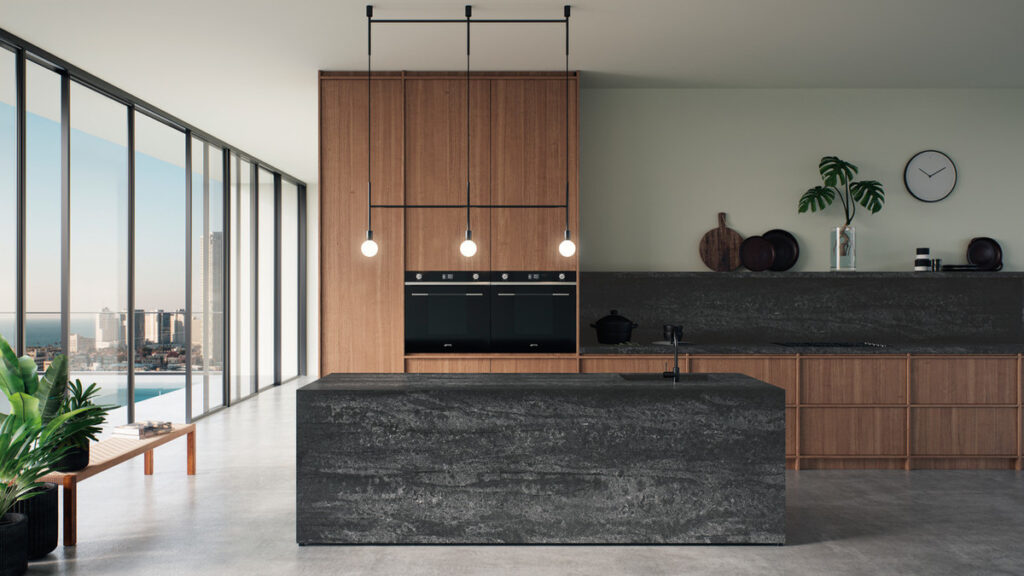
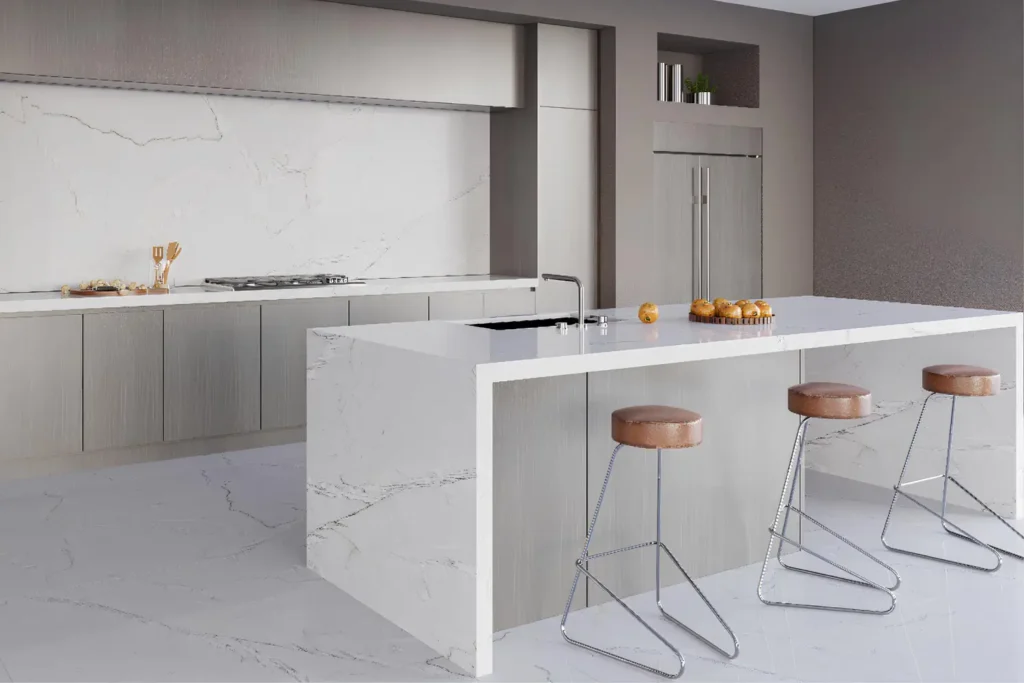
Quartz delivers unlimited options. Because it’s engineered, manufacturers can produce virtually any color—brilliant whites, deep blacks, vibrant blues, soft greens. Patterns can be perfectly uniform or designed to mimic natural marble. For modern kitchens where consistency matters, quartz provides exactly what you specify.
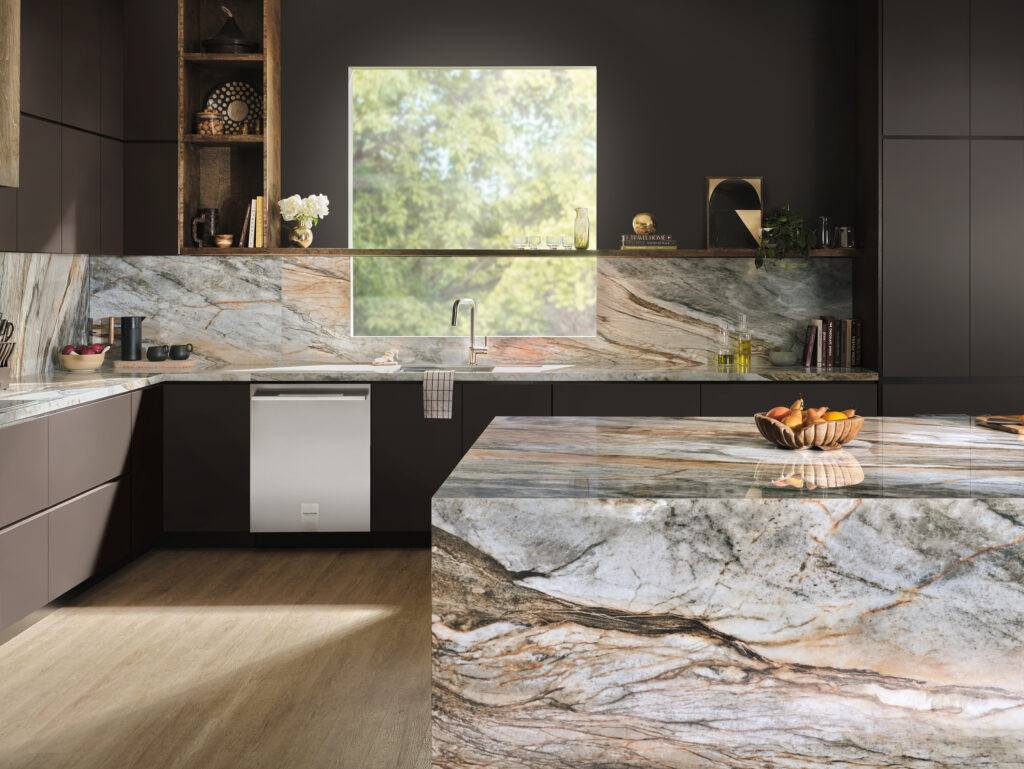
Quartzite delivers one-of-a-kind beauty. The natural veining often resembles marble—soft, flowing, layered—but with far superior durability. The color palette runs narrower (whites, grays, beiges, soft pinks, occasional blues), but within that range, each slab is genuinely unique. If you want something that looks like marble but performs better, quartzite is often the answer.
The question: Do you want a surface that matches your vision exactly, or one that brings its own artistry?
Hardness and Durability
Both materials handle kitchen life admirably, but they’re built differently.
On the Mohs hardness scale (where diamond is 10), quartzite scores 7-8 while quartz scores around 7. Both resist scratching and chipping in normal use.
Here’s the nuance: the resin binders in quartz give it slight flexibility, making it somewhat more resistant to edge chipping. Quartzite’s rigid crystalline structure is harder overall but can chip if struck at the wrong angle.
For practical purposes, both are excellent. Neither will disappoint in a typical kitchen environment.
Heat Resistance: The Critical Divide
This is where the materials diverge dramatically—and where the wrong choice creates daily frustration.
Quartzite handles heat beautifully. It was literally forged by heat and pressure. Hot pots, sizzling pans, fresh-from-the-oven baking sheets—set them directly on the surface without worry.
Quartz cannot tolerate high heat. The resins that bind it begin melting around 300°F (150°C). A hot pan placed directly on quartz can cause permanent discoloration or scorching. Trivets and hot pads aren’t optional—they’re mandatory.
If you’re the cook who grabs a hot pan and sets it wherever’s convenient, quartzite is your material. If you’re disciplined about using trivets, quartz works fine.
Maintenance: Sealed vs. Carefree
This difference shapes daily life with your countertop.
Quartz requires almost nothing. The manufacturing process creates a non-porous surface that never needs sealing. It resists stains, bacteria, and moisture inherently. Daily cleaning means soap and water. That’s it.
Quartzite demands regular sealing. As a natural stone, it’s porous. Without proper sealing (typically every 1-3 years), liquids like wine, oil, and coffee can penetrate and stain permanently.
For busy households that want true set-and-forget convenience, quartz wins. For homeowners willing to maintain their investment, quartzite rewards the effort with natural beauty.
Lifespan: How Long Will They Last?
Both materials are long-term investments, but natural stone has the edge on longevity.
Quartz typically lasts 20-60 years with proper care.
Quartzite can last 50-100 years or more when properly maintained.
If you’re building a forever home, quartzite’s longer potential lifespan might matter. For most homeowners, both materials will outlast their interest in the current design.
Which One Fits Your Life?
Forget which is “better.” The right question is which fits how you actually live.
Choose quartz if:
- Low maintenance is a priority
- You want consistent color and pattern
- You’ll use trivets reliably
- Modern, uniform aesthetics appeal to you
- Budget is a significant factor
Choose quartzite if:
- You want natural, one-of-a-kind beauty
- Heat resistance matters (you set hot pans directly down)
- You’re willing to seal regularly
- Long-term value outweighs upfront cost
See Them Side by Side
Reading about materials only takes you so far. The real decision happens when you’re standing in front of actual slabs, running your hand across the surfaces, seeing how light plays differently on engineered consistency versus natural variation.
Before choosing your countertop material, visit a showroom. Compare options in person. Ask questions.
If you’re planning a kitchen remodeling project and want to explore both quartz and quartzite, visit our showroom locations to see our extensive collection. Our experts will help you find the stone that fits your kitchen—and your life.